
Have you ever paused while typing and wondered, is it meant or ment? You’re not alone. English spelling can be tricky, especially when words sound the same but look completely different from what we expect.
The confusion between meant or ment is common because both sound nearly identical when spoken. However, only one of them is actually correct in standard English. In this guide, we’ll break down the difference, explain proper usage, and help you remember the right spelling every time.
If you’ve ever asked yourself whether to write meant or ment, this article will clear it up once and for all.
Is It Meant or Ment?
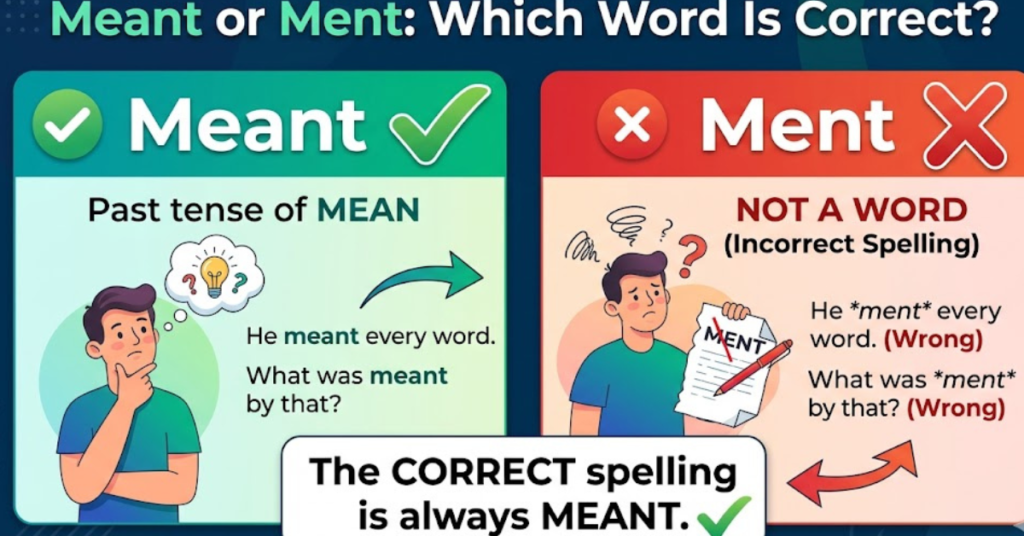
The correct word is meant.
“Ment” is not considered a standard English word in formal writing. It is usually a misspelling of “meant.”
Example:
I meant to call you yesterday.
I ment to call you yesterday.
So if you’re writing an email, school paper, blog post, or professional message, always use meant.
What Does “Meant” Mean?
The word meant is the past tense and past participle of the verb mean.
Definition of Meant:
It can mean:
- Intended something
- Signified something
- Had a particular purpose
- Was supposed to happen
Examples:
- I meant to reply earlier.
- What did you mean by that?
- This gift was meant for you.
- She meant no harm.
In all these cases, “meant” is the correct grammatical form.
Why Do People Write “Ment”?
The reason many people type ment instead of meant is pronunciation.
When spoken quickly, “meant” often sounds like “ment,” especially in casual conversation. Because of this, many learners—and even native speakers—spell it the way they hear it.
This happens with many English words, such as:
- friend → sounds like “frend”
- said → sounds like “sed”
- does → sounds like “duz”
English spelling doesn’t always match pronunciation, which is why mistakes like meant or ment are so common.
Easy Trick to Remember Meant
A simple memory trick:
Think of the base word: Mean
Since the original verb is mean, the correct past tense keeps part of that spelling:
Mean → Meant
Not:
Mean → Ment
This makes it easier to remember that meant is the correct spelling.
Common Sentences Using “Meant”
Here are some everyday examples where people often wonder whether to use meant or ment:
Correct Usage Examples
- I meant to send that message.
- He meant what he said.
- This lesson was meant to help students.
- They meant well, even if it didn’t work out.
- Was this package meant for me?
Using “ment” in any of these examples would be incorrect.
Meant vs Ment in Text Messages
In casual texting, some people write “ment” as slang or shorthand. While it may appear in chats or social media comments, it is still not grammatically correct.
Example:
Text message:
“I ment to tell you earlier lol”
Formal correction:
“I meant to tell you earlier.”
So while “ment” might show up online, meant should always be used in proper writing.
Grammar Rule Behind “Meant”
Let’s simplify the grammar.
Verb Forms of Mean
| Base Form | Past Tense | Past Participle |
| mean | meant | meant |
Examples:
- Present: I mean what I say.
- Past: I meant what I said.
- Perfect: I have meant well.
This shows clearly that meant is the correct grammatical form.
Common Mistakes to Avoid
When deciding between meant or ment, avoid these errors:
Mistake #1: Spelling by Sound
Just because it sounds like “ment” doesn’t mean it should be written that way.
Mistake #2: Assuming “Ment” Is Informal English
Even in casual writing, “ment” is still considered a spelling mistake.
Mistake #3: Mixing It with Other Words
Some people confuse it with suffixes like:
- enjoyment
- agreement
- movement
But “ment” in those words is a suffix—not the word “meant.”
Quick Comparison: Meant or Ment
Use This Simple Rule
Use Meant When:
- Referring to the past tense of “mean”
- Writing formal or correct English
- Describing intention or purpose
Avoid Ment When:
- Writing essays
- Sending professional emails
- Creating content for websites
- Posting educational or business content
In short: Always choose meant.
FAQs About Meant or Ment
Is “ment” ever correct?
In standard English, no. “Ment” is usually just a misspelling of “meant.” It may appear in slang or casual texting, but it is not grammatically correct.
Is it meant or ment in a sentence?
The correct form is always meant.
Example:
I meant to help.
I ment to help.
Why is “meant” spelled that way?
English spelling follows historical patterns rather than pronunciation. Since it comes from the verb “mean,” the spelling remains connected to the original word.
Can I use “ment” in informal writing?
It may appear in texts or chats, but it is still technically incorrect. For proper communication, “meant” is the better choice.
What is the past tense of mean?
The past tense of mean is meant.
Example:
Present: I mean no offense.
Past: I meant no offense.
Conclusion
If you’ve been wondering about meant or ment, the answer is simple: meant is correct, ment is not.
The confusion happens because both sound alike, but English spelling often follows rules that pronunciation doesn’t reveal. Remember that “meant” comes from the verb “mean,” making it the proper past tense and the only correct option for standard writing.
The next time you stop to ask, is it meant or ment, you’ll know exactly what to choose.
Want to improve more confusing English words like this? Keep exploring grammar guides and build stronger writing habits one word at a time.