
If you’ve ever dealt with splattering grease and uneven strips, it’s time to rethink your method. Learning how to bake bacon is a simple kitchen upgrade that delivers crispy, evenly cooked results every time. Whether you’re cooking breakfast for one or feeding a crowd, oven-baked bacon is cleaner, easier, and surprisingly foolproof.
Why Bake Bacon Instead of Frying?
Before diving into how to bake bacon in the oven, let’s look at why this method is so popular.
Key Benefits
- Even cooking across all slices
- Less mess compared to stovetop frying
- Hands-free process (no flipping required)
- Easy to cook large batches at once
Baking bacon isn’t just convenient—it’s consistent.
How to Bake Bacon in the Oven (Step-by-Step)
This is the most reliable way to get perfect bacon every time.
What You’ll Need
- Bacon strips
- Baking sheet
- Aluminum foil or parchment paper (optional)
- Wire rack (optional for extra crispiness)
Instructions
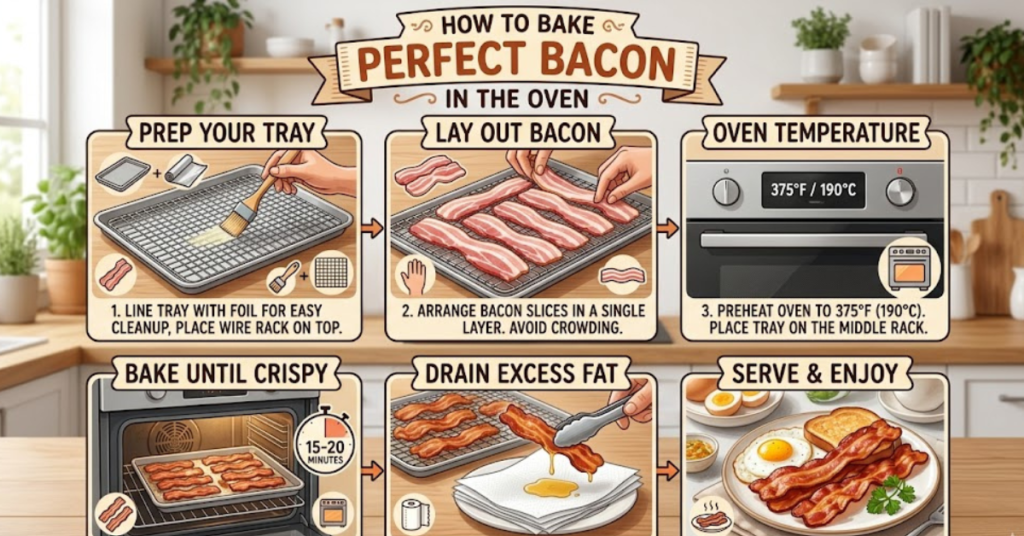
- Preheat your oven
Set it to 400°F (200°C), a sweet spot for crispy results. - Prepare the baking tray
Line it with foil or parchment paper for easy cleanup. - Arrange the bacon
Lay strips flat in a single layer. Avoid overlapping. - Bake the bacon
Place the tray in the oven and cook for 15–20 minutes. - Check for doneness
Remove when it reaches your preferred crispiness. - Drain and serve
Transfer to paper towels to absorb excess grease.
Best Temperatures for Baking Bacon
Different temperatures can slightly change the outcome. Here’s how to adjust:
How to Bake Bacon at 350
- Takes longer (20–25 minutes)
- Produces softer, chewier bacon
How to Bake Bacon at 375
- Balanced option
- Slightly crisp with moderate cook time
Bake Bacon in the Oven at 400
- Ideal for most people
- Crispy edges and even texture
Bake Bacon at 425
- Faster cooking (12–15 minutes)
- Extra crispy, but requires close attention
Tips for Crispy Oven-Baked Bacon
If your goal is perfectly crisp strips, these tips make a big difference:
- Use a wire rack to elevate the bacon
- Avoid overcrowding the pan
- Rotate the tray halfway through cooking
- Keep an eye on it during the last few minutes
These small adjustments can take your results from good to great.
Variations: Beyond Basic Bacon
Once you’ve mastered the basics, you can try creative variations.
Popular Options
- Bacon-wrapped asparagus
A great side dish with a smoky flavor - Bacon-wrapped chicken breast
Adds moisture and richness to lean meat - Bacon-wrapped jalapeño poppers
Perfect for appetizers with a spicy kick - Bacon-wrapped scallops
A simple yet elegant seafood option
These variations follow the same baking principles, just with added ingredients.
Can You Bake Bacon Without Parchment Paper?
Yes, you can still learn how to bake bacon without parchment paper.
Alternatives
- Aluminum foil
- Directly on the baking sheet (requires more cleanup)
- Wire rack setup for better airflow
While parchment helps with cleanup, it’s not essential.
Other Cooking Methods
Although oven baking is popular, you might be curious about alternatives.
Quick Comparison
- Air fryer: Faster, crisp results with less grease
- Toaster oven: Good for small batches
- Stovetop: Traditional but messier
Still, baking remains the easiest method for consistency and convenience.
Common Mistakes to Avoid
Even simple recipes can go wrong. Here are pitfalls to watch for:
- Overlapping bacon slices
- Skipping preheating
- Using too high heat without monitoring
- Leaving bacon unattended near the end
Avoiding these mistakes ensures better results every time.
FAQs
1. How long does it take to bake bacon in the oven?
It usually takes 15–20 minutes at 400°F, depending on thickness.
2. What is the best temperature for baking bacon?
400°F is widely considered the best balance of crispiness and cook time.
3. Do you need to flip bacon when baking?
No, flipping isn’t necessary when baking in the oven.
4. Can you bake bacon directly on the pan?
Yes, but lining the tray makes cleanup much easier.
5. How do you make bacon extra crispy?
Use a wire rack, bake at a slightly higher temperature, and cook a few minutes longer.
Conclusion
Mastering how to bake bacon is one of those small kitchen skills that pays off every time you cook. It’s cleaner, easier, and more consistent than frying, making it perfect for both beginners and experienced cooks. With the right temperature, a simple setup, and a few helpful tips, you can enjoy perfectly crispy bacon without the hassle.
If you’re ready to take your cooking further, try experimenting with bacon-wrapped recipes or different oven techniques to find your perfect style.