
Ever noticed a bad taste in your mouth, persistent bad breath, or tiny white lumps hiding in the back of your throat? Those could be tonsil stones—and yes, they’re as annoying as they sound.
If you’ve been searching for how to remove tonsil stones, you’re not alone. Tonsil stones, also called tonsilloliths, are common and usually harmless, but they can cause discomfort, bad breath, and irritation. The good news? In many cases, you can remove them safely at home without needing a doctor.
In this guide, we’ll cover how to remove tonsil stones at home, how to do it without triggering your gag reflex, and the safest methods using tools like cotton swabs and water flossers.
What Are Tonsil Stones?
Tonsil stones are small, hardened deposits made of:
- Food particles
- Dead cells
- Mucus
- Bacteria
- Minerals like calcium
These materials get trapped in tiny pockets on your tonsils called crypts. Over time, they harden into small white or yellowish stones.
Common Symptoms of Tonsil Stones
You may have tonsil stones if you notice:
- Persistent bad breath (halitosis)
- Sore throat
- Difficulty swallowing
- Ear pain
- White or yellow spots on the tonsils
- A bad taste in the mouth
- Feeling like something is stuck in your throat
How to Remove Tonsil Stones Safely
Before trying any removal method, remember one important rule: be gentle. Your tonsils are sensitive, and aggressive poking can lead to bleeding or infection.
Let’s look at the safest ways.
How to Remove Tonsil Stones at Home
Most small tonsil stones can be removed at home using simple methods.
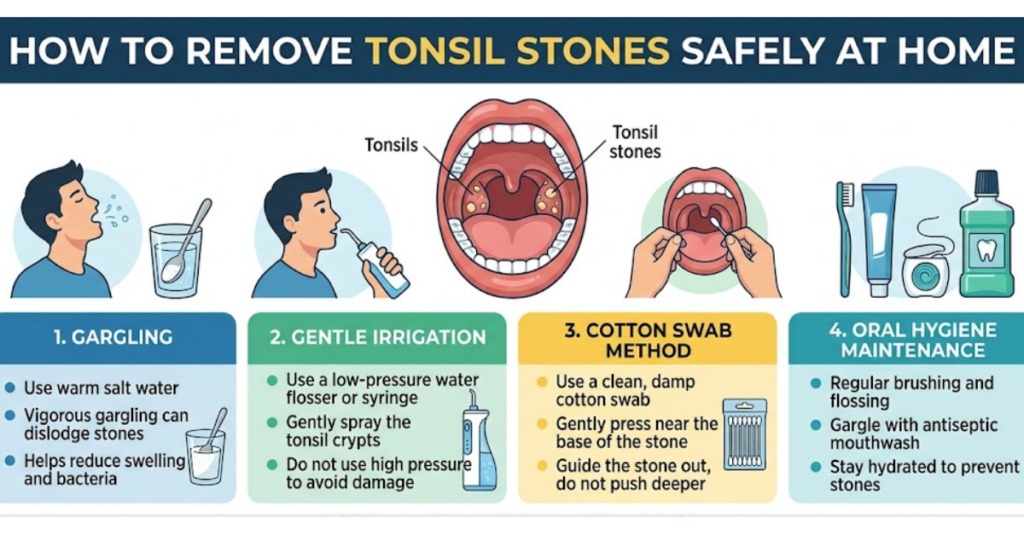
1. Gargle With Warm Salt Water
This is often the easiest and safest first step.
How to do it:
- Mix 1/2 teaspoon of salt into a glass of warm water
- Gargle for 15–30 seconds
- Repeat several times a day
Why it helps:
- Loosens stones
- Reduces bacteria
- Soothes throat irritation
- Helps prevent future stones
This method works especially well for small or loose tonsil stones.
How to Remove Tonsil Stones With Cotton Swab
Using a cotton swab can help push out visible stones, but it must be done carefully.
Steps:
- Wash your hands thoroughly
- Stand in front of a mirror with good lighting
- Use a flashlight if needed
- Gently press beside the tonsil stone—not directly on it
- Push lightly until the stone loosens
Important Tips:
- Use a soft cotton swab only
- Never use sharp objects
- Stop immediately if there is pain or bleeding
This is one of the most searched methods for how to remove tonsil stones with cotton swab, but caution is key.
How to Remove Tonsil Stones With Water Flosser
A water flosser can be very effective when used properly.
Steps:
- Fill the water flosser with clean, lukewarm water
- Set it to the lowest pressure setting
- Aim near the stone—not directly into the tonsil
- Gently flush around the area
Why it works:
- Dislodges stones gently
- Less invasive than manual removal
- Helps clean bacteria buildup
If you’re researching how to remove tonsil stones with water flosser, always start with low pressure to avoid injury.
How to Remove Tonsil Stones With Waterpik
A Waterpik is simply a popular brand of water flosser, and many people use it for tonsil stone removal.
Best practices:
- Use the lowest pressure setting
- Avoid high-pressure blasts
- Use warm water for comfort
- Never force the nozzle deep into the throat
Learning how to remove tonsil stones with Waterpik safely can save you from painful irritation.
How to Remove Tonsil Stones Without Gagging
The gag reflex is one of the biggest challenges during tonsil stone removal.
Tips to reduce gagging:
1. Breathe Through Your Nose
Slow, deep breathing helps relax throat muscles.
2. Use a Tongue Depressor Carefully
This can help improve visibility without touching sensitive areas.
3. Try Removing Them After Brushing Teeth
Your throat may feel less sensitive.
4. Avoid Going Too Deep
Only work with stones you can clearly see.
5. Use Salt Water First
This can loosen stones naturally and reduce the need for direct contact.
Knowing how to remove tonsil stones without gagging makes the process much easier and less stressful.
What NOT to Do
Avoid these common mistakes:
- Don’t use sharp tools like tweezers or pins
- Don’t scrape aggressively
- Don’t use high-pressure water settings
- Don’t ignore signs of infection
- Don’t keep forcing removal if it hurts
Sometimes, leaving it alone is safer than causing damage.
When to See a Doctor
Home removal isn’t always the best option.
See a healthcare provider if:
- Tonsil stones keep coming back
- They cause severe pain
- You experience bleeding
- Swallowing becomes difficult
- There are signs of infection
- The stones are too deep to reach safely
In some cases, doctors may recommend professional removal or even tonsil removal for chronic problems.
How to Prevent Tonsil Stones
Prevention is often easier than removal.
Daily habits that help:
- Brush teeth twice daily
- Floss regularly
- Use alcohol-free mouthwash
- Gargle with salt water
- Stay hydrated
- Avoid smoking
- Treat sinus or postnasal drip issues
Good oral hygiene is your best defense.
FAQs About How to Remove Tonsil Stones
Can tonsil stones go away on their own?
Yes, small tonsil stones often fall out naturally when you cough, swallow, or gargle.
Is it safe to remove tonsil stones yourself?
Yes, if done gently using safe methods like salt water, cotton swabs, or a low-pressure water flosser.
Why do tonsil stones smell so bad?
They contain bacteria, food debris, and sulfur compounds, which create a strong unpleasant odor.
Can a dentist remove tonsil stones?
Sometimes, but ENT specialists are usually better equipped for deeper or recurring stones.
Does mouthwash help with tonsil stones?
Yes, especially alcohol-free antibacterial mouthwash. It helps reduce bacteria and bad breath.
Should I remove deep tonsil stones?
No. Deep stones should be checked by a doctor to avoid injury or infection.
Conclusion
Learning how to remove tonsil stones safely can make a huge difference in your comfort, breath, and overall oral health. Whether you choose salt water gargles, a cotton swab, or learn how to remove tonsil stones with water flosser, the key is always gentle care.
If you’re dealing with frequent tonsil stones, prevention matters just as much as removal. Strong oral hygiene habits and regular gargling can help keep them from coming back.
And if the problem becomes painful or persistent, don’t hesitate to see a healthcare professional. Sometimes the safest solution is expert help.