
You’ve probably seen both “make do” and “make due” floating around online—but only one of them is actually correct. If you’ve ever paused mid-sentence wondering “is it make do or make due?”, you’re not alone. This common mix-up trips up even confident writers.
In this article, we’ll break down the difference between make do or make due, explain the correct phrase, explore its meaning, and show you how to use it properly in everyday writing.
Make Do or Make Due: Which One Is Correct?
Let’s clear this up right away:
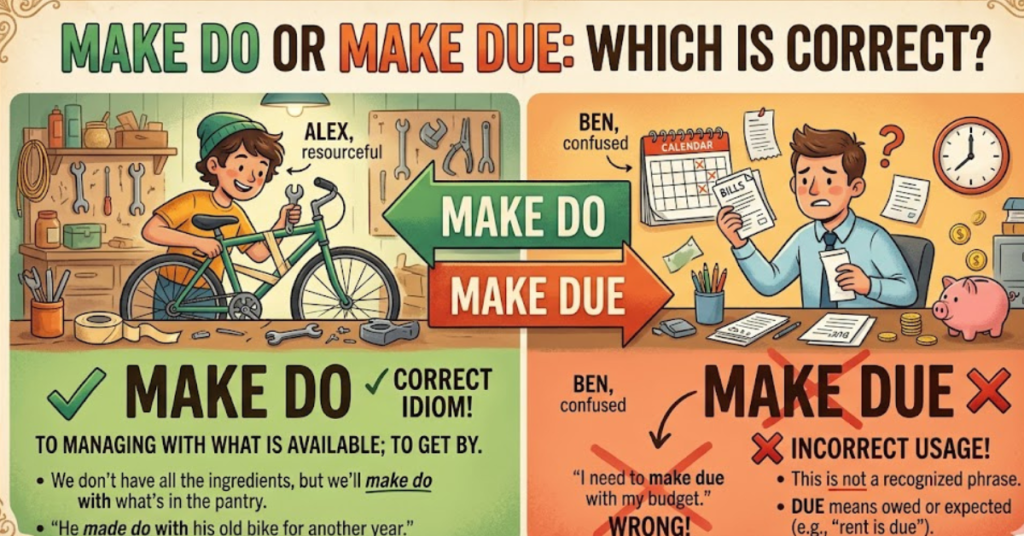
The correct phrase is “make do.”
“Make due” is incorrect in almost all contexts.
Why “Make Do” Is Correct
The phrase “make do” means to manage or cope with something you have, even if it’s not ideal. It’s about improvising or getting by with limited resources.
Examples:
- We didn’t have enough chairs, so we had to make do with stools.
- I forgot my charger, so I’ll make do until I get home.
Why “Make Due” Is Wrong
“Due” relates to something owed, expected, or scheduled—like a deadline or payment. It doesn’t carry the meaning of managing with limited resources, which is why “make due” doesn’t make sense in this context.
What Does “Make Do” Mean?
At its core, make do means:
- To cope with a situation using what’s available
- To manage without something better
- To improvise when resources are limited
Simple Definition:
Make do = manage with what you have
This phrase is commonly used in both casual conversations and formal writing.
Origin of the Phrase “Make Do”
The expression “make do” dates back to the 18th century. The word “do” here implies action or effort—essentially, making something work.
Historically, it was often used during times of scarcity, such as wartime rationing, when people had to make do with less.
Common Mistakes and Why They Happen
Many people confuse make do or make due because:
- The words “do” and “due” sound identical
- Spellcheck tools don’t always catch context errors
- “Due” feels more formal, so it seems correct
Quick Tip to Remember
If you can replace the phrase with “manage,” then “make do” is the right choice.
I’ll make do → I’ll manage
I’ll make due → doesn’t make sense
Examples of “Make Do” in Sentences
Here are a few more examples to help cement your understanding:
- We didn’t have milk, so we had to make do with water in the recipe.
- During the trip, we made do with limited supplies.
- It’s not perfect, but it will make do for now.
Related Phrases and Synonyms
To enrich your vocabulary, here are some alternatives and related expressions:
- Get by
- Manage
- Cope
- Improvise
- Make the best of it
These can sometimes replace make do, depending on the context.
When If Ever Can You Use “Make Due”?
Technically, “make due” could appear in very rare, literal contexts, such as:
- “Make due payments on time.”
But in the context of “make do or make due”, the comparison is clear:
Only “make do” is correct.
FAQs
1. Is it “make do” or “make due”?
The correct phrase is “make do.” “Make due” is a common mistake and should be avoided.
2. What does “make do” mean?
It means to manage or cope with what you have, especially when resources are limited.
3. Why do people say “make due” instead of “make do”?
Because the two phrases sound the same, and “due” seems more formal, leading to confusion.
4. Can “make due” ever be correct?
Only in very specific contexts related to payments or obligations, but not as a substitute for “make do.”
5. How can I remember the correct phrase?
Think of “do” as action—you’re doing your best with what you have.
Conclusion
So, when it comes to make do or make due, the answer is simple:
Stick with “make do” every time.
It’s a small distinction, but getting it right can instantly improve your writing clarity and credibility. Whether you’re crafting emails, essays, or social media posts, using the correct phrase shows attention to detail.
If you found this helpful, consider exploring other commonly confused phrases—you might be surprised how many small tweaks can elevate your language skills.