
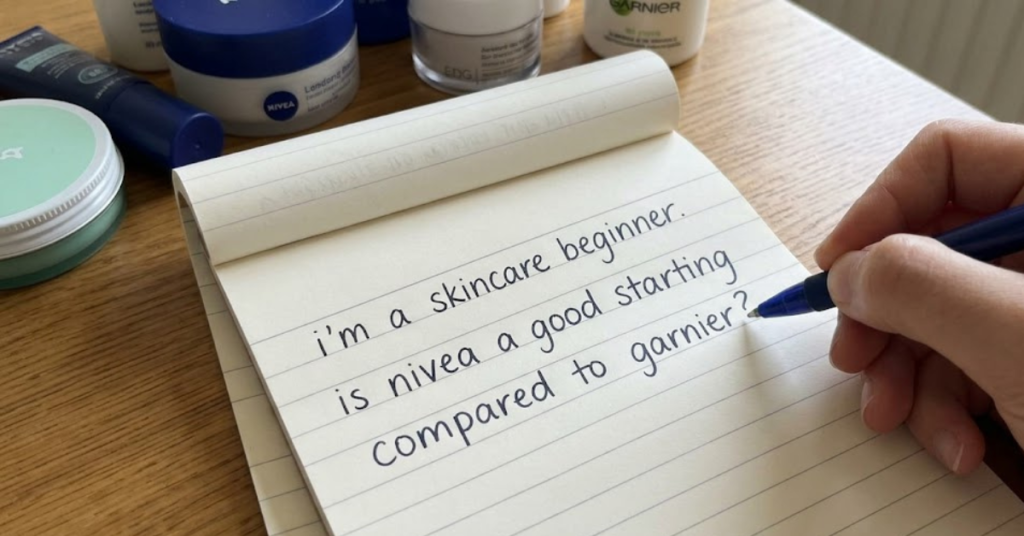

Starting skincare can feel overwhelming—so many brands, products, and opinions. If you’re wondering, “I’m a skincare beginner. Is Nivea a good starting brand compared to Garnier?”, you’re asking exactly the right question.
Both Nivea and Garnier are beginner-friendly, affordable, and widely available. But they’re not identical—and choosing the right one depends on your skin type, goals, and preferences.
Let’s break it down in a simple, no-confusion way.
Understanding the Basics: Nivea vs Garnier
Before deciding which brand is better, it helps to understand what each one focuses on.
Nivea: Simple, Classic, Moisture-Focused
Nivea is known for its straightforward, no-fuss skincare. Think hydration, gentle cleansing, and classic formulas.
Best for:
- Dry or normal skin
- People who want simple routines
- Basic moisturization
What stands out:
- Thick, rich creams
- Minimal active ingredients
- Trusted, long-standing formulas
Garnier: Modern, Ingredient-Focused Skincare
Garnier takes a more trend-driven approach, often featuring active ingredients like vitamin C and hyaluronic acid.
Best for:
- Oily or combination skin
- Brightening and acne concerns
- Beginners interested in “active” skincare
What stands out:
- Micellar water cleansers
- Lightweight formulas
- Ingredient-based marketing
I’m a Skincare Beginner: Is Nivea a Good Starting Brand Compared to Garnier?
Short answer: Yes—but it depends on your skin goals.
If your main concern is hydration and simplicity, Nivea is a great place to start. If you’re looking to target specific concerns like dullness or acne, Garnier might be a better fit.
Key Differences Between Nivea and Garnier
1. Simplicity vs Targeted Skincare
- Nivea: Basic, reliable skincare
- Garnier: Focused on specific results (brightening, oil control)
2. Texture and Feel
- Nivea: Thick, creamy, sometimes heavy
- Garnier: Lightweight, fast-absorbing
If you dislike greasy products, Garnier may feel better.
3. Ingredients and Innovation
- Nivea: Traditional formulas
- Garnier: Includes trending ingredients like:
- Vitamin C
- Salicylic acid
- Hyaluronic acid
4. Skin Type Suitability
| Skin Type | Better Choice |
| Dry skin | Nivea |
| Oily skin | Garnier |
| Sensitive skin | Nivea (simpler formulas) |
| Acne-prone skin | Garnier |
How to Choose as a Beginner
If you’re still unsure, here’s a simple way to decide.
Choose Nivea if you:
- Want a basic routine
- Have dry or sensitive skin
- Prefer fewer ingredients
Choose Garnier if you:
- Want visible results (brightening, acne control)
- Have oily or combination skin
- Are curious about skincare “actives”
A Simple Beginner Routine (Using Either Brand)
You don’t need 10 products to start. Keep it simple:
Step-by-step routine:
- Cleanser – Wash your face twice daily
- Moisturizer – Keep skin hydrated
- Sunscreen – Protect your skin every morning
Both Nivea and Garnier offer products for these basic steps.
Common Mistakes Beginners Should Avoid
- Using too many products at once
- Switching brands too quickly
- Ignoring sunscreen
- Choosing products not suited to your skin type
FAQs
1. I’m a skincare beginner. Is Nivea a good starting brand compared to Garnier?
Yes, especially for simple hydration and sensitive skin. Garnier is better for targeted concerns.
2. Which brand is better for acne-prone skin?
Garnier usually offers more acne-focused products with active ingredients.
3. Is Nivea safe for daily use?
Yes, most Nivea products are gentle and designed for everyday use.
4. Can I use both Nivea and Garnier together?
Absolutely. Many people mix products based on their needs.
5. Which brand is better for oily skin?
Garnier tends to be more suitable due to its lightweight formulas.
Conclusion
So, I’m a skincare beginner. Is Nivea a good starting brand compared to Garnier? The honest answer is: both are excellent starting points—but for different reasons.
- Choose Nivea for simplicity, hydration, and gentle care
- Choose Garnier for targeted results and lightweight formulas
The best skincare routine isn’t about picking the “perfect” brand—it’s about finding what works for your skin and sticking with it. Start simple, stay consistent, and adjust as you learn what your skin loves.