
Feeling exhausted, short of breath, or unusually weak? Iron deficiency anemia can sneak up on you, and many people turn to IV iron for faster relief. But how quickly does IV iron increase hemoglobin, really?
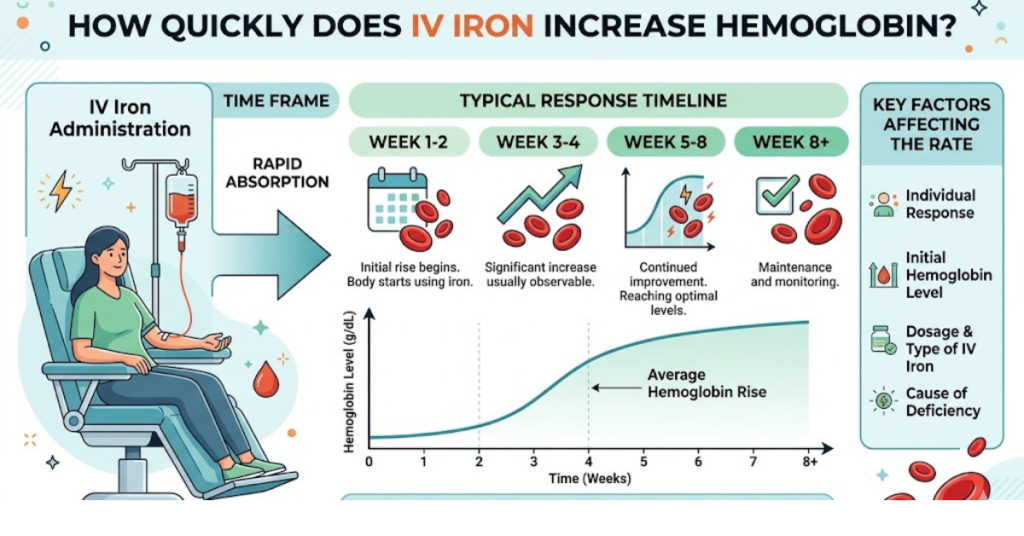
The short answer: most people start seeing hemoglobin levels rise within 1–2 weeks, with significant improvement in 2–4 weeks, and full benefits often within 4–8 weeks. However, the exact timeline depends on several factors — including the severity of anemia, underlying health conditions, and the type of IV iron used.
Let’s break it down in simple, practical terms so you know what to expect.
What Happens After an IV Iron Infusion?
When you receive IV iron, the iron goes directly into your bloodstream, bypassing the digestive system. This makes it much faster than oral supplements.
Here’s what typically happens:
- Within 24–48 hours – Your body begins using the iron to produce red blood cells
- 3–5 days – Bone marrow increases red blood cell production
- 1–2 weeks – Hemoglobin levels start rising
- 2–4 weeks – Noticeable improvement in lab values
- 4–8 weeks – Hemoglobin often reaches optimal levels
Because of this direct absorption, IV iron is often recommended when oral iron isn’t working or when rapid correction is needed.
How Quickly Does IV Iron Increase Hemoglobin? Typical Timeline
Here’s a more detailed timeline based on clinical observations:
Week 1
- Early red blood cell production begins
- You may not feel much different yet
- Lab changes are usually small
Week 2
- Hemoglobin typically rises by 1–2 g/dL
- Some people start feeling less fatigued
- Shortness of breath may improve
Weeks 3–4
- Hemoglobin continues to increase steadily
- Energy levels improve significantly
- Dizziness and weakness often decrease
Weeks 6–8
- Hemoglobin may return to normal range
- Full symptom relief for many people
- Iron stores (ferritin) are replenished
Factors That Affect How Fast Hemoglobin Rises
Not everyone responds at the same speed. Several things influence how quickly IV iron increases hemoglobin:
1. Severity of Anemia
- Severe anemia may take longer to correct
- Mild cases improve faster
2. Underlying Cause
IV iron works fastest when iron deficiency is the only problem. It may take longer if you have:
- Chronic kidney disease
- Ongoing blood loss
- Inflammatory conditions
- Pregnancy-related anemia
3. Type of IV Iron Used
Different formulations release iron at different rates:
- Iron sucrose
- Ferric carboxymaltose
- Iron dextran
- Ferumoxytol
Some allow larger single doses, which may speed up recovery.
4. Your Body’s Response
Your bone marrow activity and overall health also play a role. Younger, otherwise healthy individuals often respond faster.
When Will You Start Feeling Better?
Lab values improve before symptoms do. Here’s what most people experience:
- Week 1: Slight improvement (subtle)
- Week 2–3: More energy, less fatigue
- Week 3–4: Better concentration and stamina
- Week 4–6: Significant symptom relief
Some people report feeling better within days, but measurable hemoglobin increases usually take about 1–2 weeks.
IV Iron vs Oral Iron: Which Works Faster?
Here’s a quick comparison:
IV Iron
- Faster hemoglobin increase
- Works even with absorption problems
- Fewer gastrointestinal side effects
- Requires clinic visit
Oral Iron
- Slower (may take 6–12 weeks)
- Can cause stomach upset
- Less effective in severe deficiency
For rapid improvement, IV iron is usually the better choice.
How Much Can Hemoglobin Increase After IV Iron?
On average:
- 1–2 g/dL increase within 2–4 weeks
- 2–3 g/dL within 4–6 weeks
- Full normalization depending on starting level
Doctors typically recheck blood work 2–4 weeks after infusion.
Signs Your IV Iron Is Working
Look for these improvements:
- Less fatigue
- Improved breathing
- Better exercise tolerance
- Reduced dizziness
- Improved skin tone
These changes often appear gradually, not overnight.
FAQs About How Quickly IV Iron Increases Hemoglobin
How quickly does IV iron increase hemoglobin after one infusion?
Most people see a rise in hemoglobin within 1–2 weeks, with more noticeable improvement by 3–4 weeks.
Can hemoglobin rise in just a few days?
Your body starts producing red blood cells within days, but measurable hemoglobin increases usually take at least 7 days.
How long does IV iron stay in your system?
IV iron remains available for use for several weeks, allowing your body to steadily build hemoglobin.
Why isn’t my hemoglobin rising after IV iron?
Possible reasons include:
- Ongoing bleeding
- Chronic inflammation
- Vitamin deficiencies (B12 or folate)
- Incorrect diagnosis
Your doctor may order additional tests.
How often do you need IV iron?
Some people need:
- One large dose
- Multiple smaller doses
- Maintenance infusions every few months
It depends on the cause of your iron deficiency.
Conclusion
So, how quickly does IV iron increase hemoglobin? Most people begin seeing results within 1–2 weeks, with significant improvement in 2–4 weeks and full recovery often within 4–8 weeks. The speed depends on your anemia severity, overall health, and the type of IV iron used.
If you’re considering IV iron, the key takeaway is this: it’s one of the fastest and most effective ways to boost hemoglobin and restore energy. Always follow up with your healthcare provider and repeat labs to track progress.