
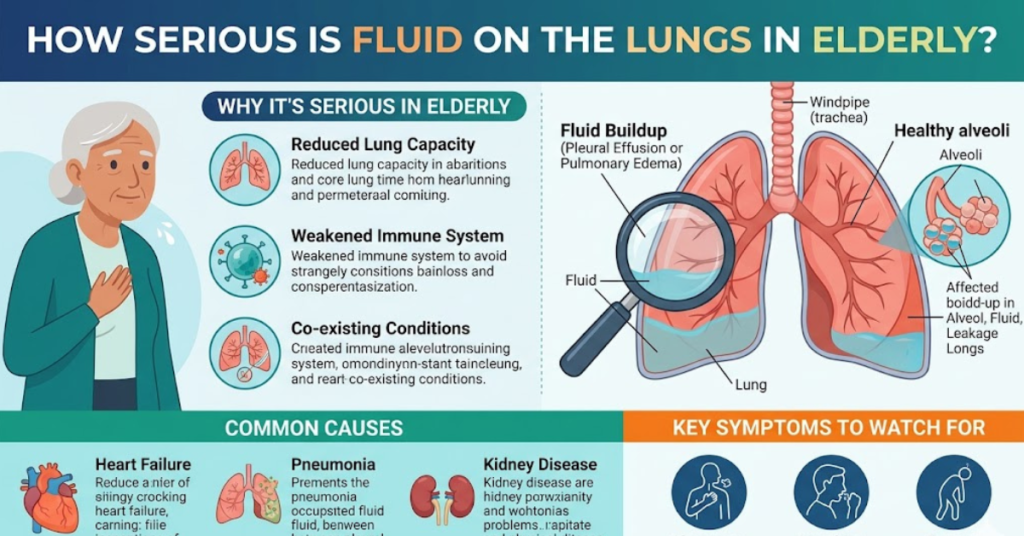

Fluid on the lungs in elderly adults can be alarming — and for good reason. It often signals an underlying health issue that needs prompt attention. If you’re wondering how serious is fluid on the lungs in elderly, the short answer is: it can range from mild and manageable to life-threatening, depending on the cause and how quickly it’s treated.
In this guide, we’ll break down what it means, why it happens, warning signs to watch for, and when to seek medical help. The goal is to give you clear, practical information in simple terms.
What Does “Fluid on the Lungs” Mean?
Fluid on the lungs usually refers to either:
- Pleural effusion – fluid buildup between the layers around the lungs
- Pulmonary edema – fluid inside the lung tissue itself
Both conditions can make breathing harder and reduce oxygen levels, which is particularly risky for older adults.
How Serious Is Fluid on the Lungs in Elderly?
The seriousness depends on several factors:
- The underlying cause
- How much fluid is present
- The person’s overall health
- How quickly treatment begins
In elderly individuals, fluid on the lungs is often more serious because:
- The immune system is weaker
- Chronic conditions are more common
- Recovery tends to be slower
- Oxygen levels drop more easily
Even a moderate fluid buildup can lead to complications in seniors.
Common Causes of Fluid on the Lungs in Elderly
Understanding the cause helps determine how serious the condition is.
1. Heart Failure (Most Common)
When the heart can’t pump effectively, fluid backs up into the lungs.
Why it’s serious: Can worsen quickly and needs ongoing management.
2. Pneumonia
Infections can cause inflammation and fluid buildup.
Why it’s serious: Elderly patients are at higher risk of complications.
3. Kidney Disease
Poor kidney function causes fluid retention.
4. Cancer
Lung cancer or cancers that spread to the lungs can cause fluid accumulation.
5. Liver Disease
Cirrhosis can lead to fluid buildup affecting breathing.
6. Pulmonary Embolism
A blood clot in the lungs may cause fluid buildup.
Some causes are medical emergencies.
Symptoms to Watch for in Elderly Patients
Symptoms may appear gradually or suddenly:
- Shortness of breath
- Difficulty breathing when lying down
- Chest pain or pressure
- Persistent cough
- Fatigue or weakness
- Swelling in legs or abdomen
- Rapid breathing
- Confusion (common in seniors)
In elderly people, confusion or sudden tiredness may be the first sign.
When Is It an Emergency?
Seek immediate medical care if the elderly person has:
- Severe breathing difficulty
- Bluish lips or fingertips
- Sudden chest pain
- Rapid worsening of symptoms
- Fainting or confusion
- Very low oxygen levels
These signs indicate the condition may be life-threatening.
How Doctors Diagnose Fluid on the Lungs
Doctors typically use:
- Physical examination
- Chest X-ray
- Ultrasound
- CT scan
- Blood tests
- Echocardiogram (to check heart function)
Sometimes, doctors remove fluid with a needle (thoracentesis) to test the cause.
Treatment Options
Treatment depends on the underlying cause.
Common Treatments Include:
- Diuretics (to remove excess fluid)
- Oxygen therapy
- Antibiotics (if infection present)
- Heart failure medications
- Fluid drainage procedure
- Treatment of underlying disease
In severe cases, hospitalization may be required.
Can Elderly Recover from Fluid on the Lungs?
Yes — many elderly patients recover, especially when treated early.
However, recovery depends on:
- Cause of fluid
- Age and overall health
- Speed of treatment
- Presence of chronic illnesses
Chronic conditions like heart failure may require long-term management.
Complications to Be Aware Of
If untreated, fluid on the lungs in elderly can lead to:
- Respiratory failure
- Severe infection
- Reduced oxygen to organs
- Hospitalization
- Increased mortality risk
This is why early detection is critical.
How to Prevent Fluid on the Lungs in Elderly
Some preventive steps include:
- Managing heart conditions properly
- Limiting salt intake
- Taking medications as prescribed
- Regular health checkups
- Monitoring weight (sudden gain may mean fluid buildup)
- Staying vaccinated (flu & pneumonia)
- Watching for early breathing changes
FAQs
Is fluid on the lungs always serious in elderly?
Not always, but it should always be evaluated by a doctor because it can worsen quickly.
How long can elderly live with fluid on lungs?
It varies widely. Some recover fully, while others with chronic conditions need ongoing care.
Can fluid on lungs go away on its own?
Sometimes mild cases improve, but medical evaluation is still necessary to identify the cause.
What is the survival rate?
Survival depends on the cause. Heart failure-related fluid has good outcomes with treatment, while cancer-related fluid may be more serious.
Is fluid on lungs painful?
It can cause chest discomfort, but the main symptom is breathing difficulty.
Conclusion
So, how serious is fluid on the lungs in elderly? It can range from manageable to life-threatening, depending on the cause and timing of treatment. Because seniors are more vulnerable, even mild symptoms should never be ignored. Early diagnosis and proper care greatly improve outcomes.
If you notice breathing issues, fatigue, or swelling in an elderly loved one, don’t wait — seek medical advice promptly. Early action can make a significant difference in recovery and quality of life.