
Fresh herbs can transform any meal, but they often spoil before you get the chance to use them. Learning how to dry herbs is one of the easiest ways to preserve flavor, save money, and reduce kitchen waste. Whether you’re growing basil in your garden or bought too much parsley at the store, drying herbs at home is simple and surprisingly satisfying.
In this guide, you’ll discover how to dry herbs naturally, in the oven, dehydrator, air fryer, and more — all explained in a clear, conversational way.
Why Dry Herbs at Home?
Drying herbs isn’t just about storage. It actually concentrates flavor and gives you a ready-to-use ingredient anytime.
Benefits include:
- Longer shelf life (up to 1 year)
- Stronger flavor
- Cost savings
- Less food waste
- Perfect for tea blends and seasoning mixes
Best Herbs for Drying
Some herbs dry better than others. Start with these beginner-friendly options:
Great for drying:
- Basil
- Mint
- Thyme
- Oregano
- Rosemary
- Sage
- Parsley
- Dill
Tender herbs like cilantro can be dried, but they lose flavor faster.
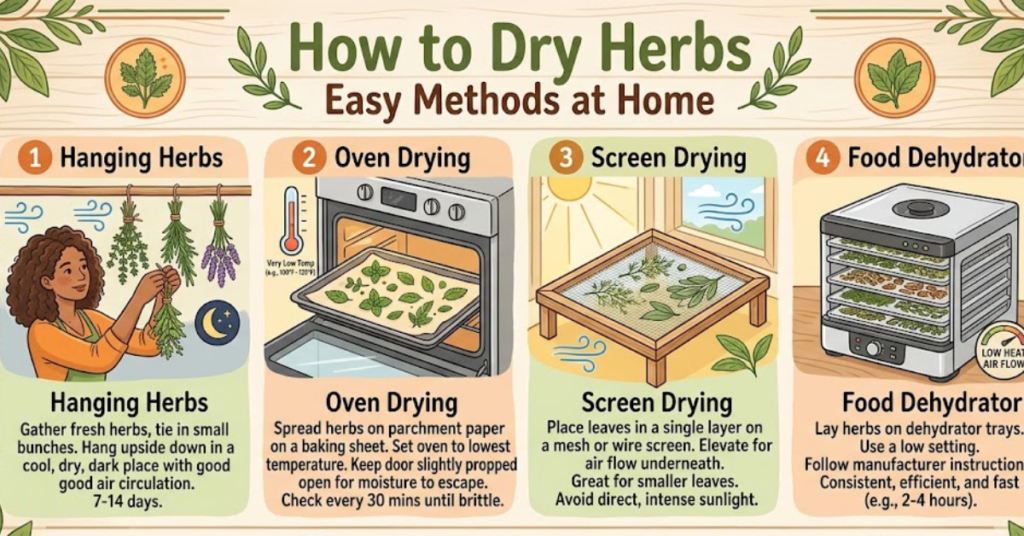
How to Dry Herbs Naturally Air Drying Method
This is the easiest and most traditional way to dry herbs without equipment.
Steps:
- Wash herbs gently and pat dry.
- Remove damaged leaves.
- Tie small bundles with string.
- Hang upside down in a warm, dry place.
- Wait 1–2 weeks until fully crisp.
Tips for best results:
- Avoid direct sunlight
- Ensure good airflow
- Keep bundles small to prevent mold
This method is perfect if you want to dry herbs naturally without using electricity.
How to Dry Herbs in Oven
If you’re short on time, using your oven is quick and effective.
Steps:
- Preheat oven to lowest setting (around 170°F / 75°C).
- Place herbs in a single layer on a baking sheet.
- Keep oven door slightly open for airflow.
- Dry for 1–2 hours, checking every 20 minutes.
- Remove once leaves crumble easily.
This method works well for people searching how to dry herbs in the oven quickly.
How to Dry Herbs in a Dehydrator
A dehydrator gives the most consistent results.
Steps:
- Spread herbs evenly on trays.
- Set temperature to 95°F–115°F (35°C–46°C).
- Dry for 1–4 hours depending on herb type.
- Check until leaves are brittle.
Using this method is ideal if you regularly dry herb in a dehydrator for long-term storage.
How to Dry Herb Without a Dehydrator
No dehydrator? No problem. You can still preserve herbs easily.
Options include:
- Air drying (best natural method)
- Oven drying
- Microwave drying (quick but less flavor)
- Air fryer drying
These methods are perfect for anyone wondering how to dry herbs without a dehydrator.
How to Dry Herbs in Air Fryer
Air fryers can work surprisingly well.
Steps:
- Set air fryer to lowest temperature (around 95°F–120°F).
- Place herbs in basket in a single layer.
- Run for 2–4 minutes.
- Check frequently to avoid burning.
This method is fast and convenient for small batches.
How to Dry Herbs for Tea
If you’re planning herbal teas, flavor preservation is key.
Best herbs for tea drying:
- Mint
- Chamomile
- Lemon balm
- Lavender
- Thyme
Tips:
- Always air dry when possible
- Avoid high heat
- Store whole leaves for better flavor
How to Store Dried Herbs
Proper storage keeps herb fresh longer.
Follow these tips:
- Use airtight glass jars
- Store away from sunlight
- Label with date
- Keep in cool, dry place
Dried herbs usually last 6–12 months.
Signs Your Herbs Are Fully Dried
You’ll know herb are ready when:
- Leaves crumble easily
- Stems snap cleanly
- No moisture remains
- Color is slightly darker but not brown
Common Mistakes to Avoid
Overcrowding herbs
Using high heat
Not drying completely
Storing before cooling
Using plastic bags
Avoiding these mistakes improves flavor and shelf life.
FAQs About Drying Herbs
How long does it take to dry herb?
Air drying takes 1–2 weeks, while oven or dehydrator methods take 1–4 hours.
Can I dry herb in the microwave?
Yes, but it may reduce flavor. Use short 20–30 second bursts.
Should I wash herbs before drying?
Yes, but dry them thoroughly to prevent mold.
What temperature is best for drying herbs?
95°F–115°F is ideal for preserving oils and flavor.
Can dried herbs go bad?
They don’t spoil but lose potency after about a year.
Conclusion
Learning how to dry herbs at home is a simple skill that delivers big rewards. Whether you choose how to dry herbs naturally, in the oven, dehydrator, or air fryer, each method helps you preserve flavor and reduce waste. Start with small batches, store them properly, and soon you’ll always have fresh-tasting herbs ready for cooking or tea.