
Learning a new language can feel overwhelming, but knowing how to learn Spanish doesn’t have to be complicated. Spanish is one of the easiest languages for English speakers to pick up, and with the right strategy, you can start understanding conversations faster than you expect. Whether you’re learning for travel, career growth, or personal interest, this guide focuses on how to learn Spanish quickly using practical, real-world methods.
In this article, you’ll discover step‑by‑step strategies, tools, and habits that make learning Spanish more efficient—and enjoyable. Let’s dive in.
Why Learn Spanish? And Why It’s Easier Than You Think
Spanish is spoken by over 500 million people worldwide, making it one of the most useful languages you can learn. It’s also phonetic, meaning words are pronounced the way they’re written—great news for beginners.
Benefits of learning Spanish:
- Travel more confidently
- Boost career opportunities
- Access Spanish movies, music, and culture
- Improve memory and cognitive skills
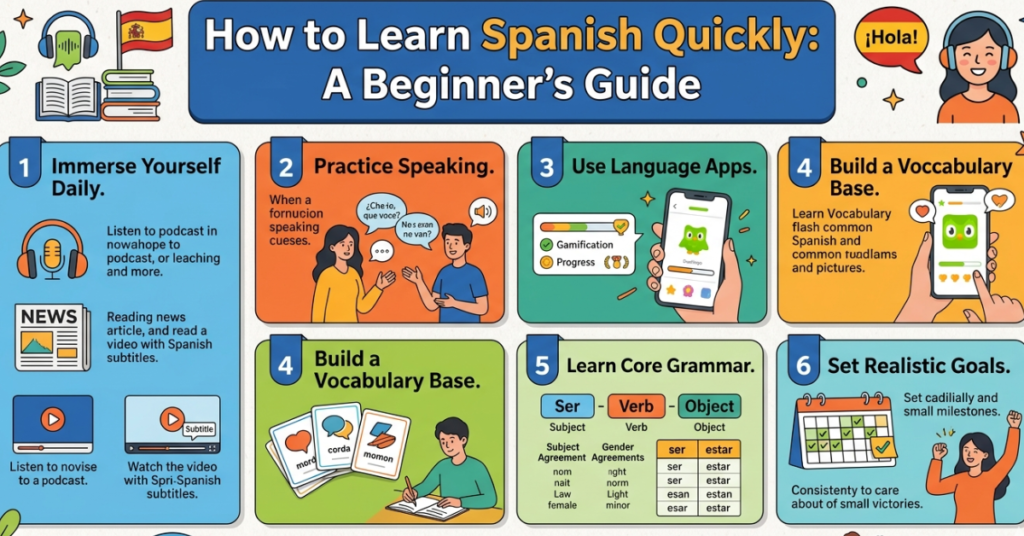
How to Learn Spanish Quickly: 10 Proven Strategies
1. Start With the Most Common Words First
If you’re serious about how to learn Spanish quickly, focus on high-frequency vocabulary. Around 1,000 words cover most everyday conversations.
Start with:
- Greetings (Hola, Buenos días)
- Common verbs (ser, estar, tener)
- Numbers and days
- Question words (qué, cómo, cuándo)
This builds a strong foundation fast.
2. Learn Basic Spanish Phrases Instead of Single Words
Memorizing phrases helps you speak sooner.
Examples:
- ¿Cómo estás? — How are you?
- ¿Cuánto cuesta? — How much does it cost?
- Me gustaría… — I would like…
Phrase-based learning improves fluency naturally.
3. Use the Immersion Method Daily
One of the fastest ways to learn Spanish is immersion. Surround yourself with the language:
- Watch Spanish YouTube videos
- Listen to Spanish podcasts
- Change your phone language
- Follow Spanish social media accounts
Even 20 minutes daily makes a difference.
4. Practice Speaking From Day One
Many learners delay speaking—but this slows progress.
Try:
- Language exchange apps (HelloTalk, Tandem)
- Speaking with native tutors
- Talking to yourself in Spanish
Speaking builds confidence quickly.
5. Focus on Spanish Pronunciation Early
Spanish pronunciation is straightforward, but practicing early helps avoid bad habits.
Tips:
- Learn vowel sounds first
- Listen and repeat audio
- Use shadowing repeat after native speakers
6. Use Language Learning Apps Strategically
Apps alone won’t make you fluent, but they help reinforce learning.
Best options:
- Duolingo beginner-friendly
- Babbel structured lessons
- Memrise vocabulary focus
- Anki flashcards with spaced repetition
Use them for 10–15 minutes daily.
7. Learn Spanish Grammar Gradually
Don’t try to master grammar all at once. Focus on essentials:
- Present tense verbs
- Gender rules (el / la)
- Basic sentence structure
- Ser vs Estar
Grammar becomes easier with exposure.
8. Watch Spanish TV Shows With Subtitles
This improves listening skills and vocabulary naturally.
Good beginner-friendly shows:
- Extra Spanish learning series
- La Casa de Papel Money Heist
- Spanish cartoons
- Travel documentaries
Start with English subtitles, then switch to Spanish.
9. Label Everyday Objects in Your Home
This simple trick reinforces memory.
Examples:
- La puerta door
- La mesa table
- El teléfono phone
You’ll learn passively throughout the day.
10. Set Realistic Goals for Faster Progress
Clear goals help you stay motivated.
Examples:
- Learn 20 new words weekly
- Practice speaking 10 minutes daily
- Watch one Spanish video per day
Consistency beats intensity.
Best Study Plan: Learn Spanish in 30 Days
Here’s a simple structure:
Week 1
- Basic vocabulary
- Greetings and phrases
- Pronunciation practice
Week 2
- Common verbs
- Listening exercises
- Simple conversations
Week 3
- Grammar basics
- Watch Spanish content
- Speaking practice
Week 4
- Real-life conversations
- Reading short texts
- Vocabulary expansion
Common Mistakes to Avoid When Learning Spanish
Avoid these to learn Spanish faster:
- Waiting too long to speak
- Memorizing without practice
- Ignoring listening skills
- Trying to learn too much grammar
- Studying inconsistently
Tools That Help You Learn Spanish Faster
Recommended resources:
- Podcasts: Coffee Break Spanish
- YouTube: SpanishDict, Butterfly Spanish
- Apps: Duolingo, Babbel
- Books: Practice Makes Perfect Spanish
- Tutors: iTalki, Preply
FAQs About How to Learn Spanish
How long does it take to learn Spanish?
With consistent practice, beginners can hold basic conversations in 3–6 months. Fluency typically takes 6–12 months.
What is the fastest way to learn Spanish?
The fastest method combines:
- Daily immersion
- Speaking practice
- Learning common phrases
- Using apps for reinforcement
Can I learn Spanish on my own?
Yes. Many learners become fluent using apps, videos, and language exchanges without formal classes.
Is Spanish hard to learn?
Spanish is considered one of the easiest languages for English speakers due to simple pronunciation and grammar.
How many words do I need to know to speak Spanish?
Around 1,000–2,000 words are enough for everyday conversations.
Conclusion: Start Learning Spanish Today
Learning how to learn Spanish effectively comes down to consistency, smart strategies, and daily exposure. Focus on common phrases, practice speaking early, and immerse yourself in Spanish content. If you apply these techniques, you’ll not only learn Spanish quickly but also enjoy the process.
Start small, stay consistent, and within weeks you’ll notice real progress. Your future Spanish-speaking self will thank you.