
Fresh flowers are beautiful, but they don’t last forever. Whether it’s a bouquet from a special occasion, garden blooms, or flowers you want to use for crafts, learning how to dry flowers is the perfect way to preserve them. The good news? You don’t need fancy tools—just a few simple techniques.
In this guide, you’ll discover how to dry flowers quickly, how to dry flowers upside down, in the microwave, book, oven, or with silica gel, plus tips for how to dry flowers for resin. Each method is beginner-friendly and designed to help your flowers keep their color and shape.
Why Dry Flowers?
Drying flowers lets you:
- Preserve sentimental bouquets
- Create home décor
- Make resin art and crafts
- Use them in candles, soaps, and cards
- Save seasonal garden blooms
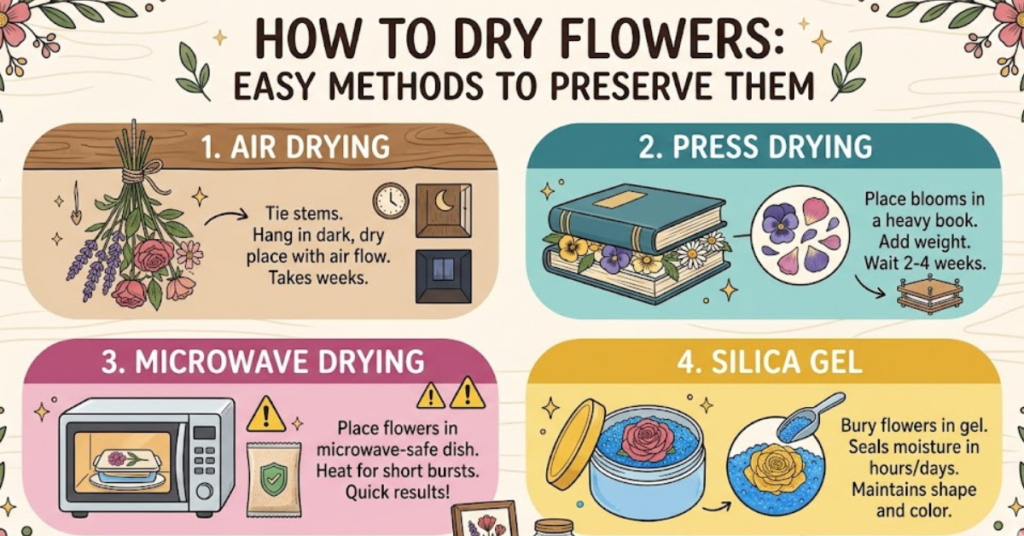
How to Dry Flowers Upside Down Air Drying Method
This is the most traditional and easiest way.
Steps:
- Remove excess leaves from stems.
- Tie flowers into small bundles.
- Hang them upside down in a dry, dark, well-ventilated space.
- Leave for 1–3 weeks until completely dry.
Best for: Roses, lavender, baby’s breath
Pros: Natural look, simple
Cons: Takes longer
Tip: Keep flowers away from sunlight to prevent fading.
How to Dry Flowers Quickly
If you’re short on time, try faster methods:
- Microwave drying
- Silica gel drying
- Oven drying
These methods can dry flowers in minutes to hours instead of weeks.
How to Dry Flowers in the Microwave
This is one of the fastest ways.
Steps:
- Place flowers in a microwave-safe container.
- Cover them gently with silica gel.
- Microwave for 30–60 seconds.
- Let them cool before removing.
Best for: Small, delicate flowers
Time: 2–5 minutes
This method is perfect for how to dry flowers for resin quickly.
How to Dry Flowers with Silica Gel
Silica gel helps flowers maintain shape and color.
Steps:
- Pour silica gel into an airtight container.
- Place flowers face-up.
- Cover completely with more gel.
- Seal and leave for 3–7 days.
Best for: Roses, daisies, peonies
Result: Vibrant, realistic-looking flowers
This is the best method for how to dry flowers for resin.
How to Dry Flowers in the Oven
This method is quick but requires attention.
Steps:
- Preheat oven to lowest setting (around 170°F / 75°C).
- Place flowers on a baking tray.
- Leave oven door slightly open.
- Check every 10 minutes.
Time: 1–2 hours
Best for: Sturdy flowers
Be careful not to burn them.
How to Dry Flowers in a Book Pressing Method
Perfect for flat crafts.
Steps:
- Place flowers between parchment paper.
- Put inside a heavy book.
- Add more weight on top.
- Wait 1–2 weeks.
Best for: Petals, small blooms
Use for: Cards, scrapbooks, resin
How to Dry Flowers for Resin
To avoid mold or discoloration:
- Use silica gel (best option)
- Make sure flowers are fully dry
- Avoid thick or juicy flowers
- Store in airtight container before use
Pro Tip: For how to dry flowers for resin quickly, use microwave + silica gel.
How to Dry Flower to Preserve Them Longer
Follow these tips:
- Choose fresh flower
- Avoid humid environments
- Keep out of direct sunlight
- Spray with hairspray to seal
- Store in airtight boxes
These steps help maintain color and structure.
Best Flower for Drying
- Roses
- Lavender
- Baby’s breath
- Hydrangeas
- Daisies
- Strawflowers
FAQs
How long does it take to dry flower?
Air drying takes 1–3 weeks, while microwave drying takes only a few minutes.
What is the fastest way to dry flower?
The microwave with silica gel is the quickest and most effective method.
Can I dry flower without silica gel?
Yes, you can air dry, press in a book, or use an oven.
How do you keep dried flowers from falling apart?
Spray lightly with hairspray and handle gently.
What flower are hardest to dry?
Thick flowers like tulips and lilies are harder because they hold moisture.
Conclusion
Learning how to dry flowers opens up endless creative possibilities. Whether you choose to dry flowers upside down, use the microwave, press them in a book, or preserve them with silica gel, each method has its benefits. If you’re in a hurry, try how to dry flowers quickly using microwave or oven techniques. For crafts and resin art, silica gel gives the best results.