
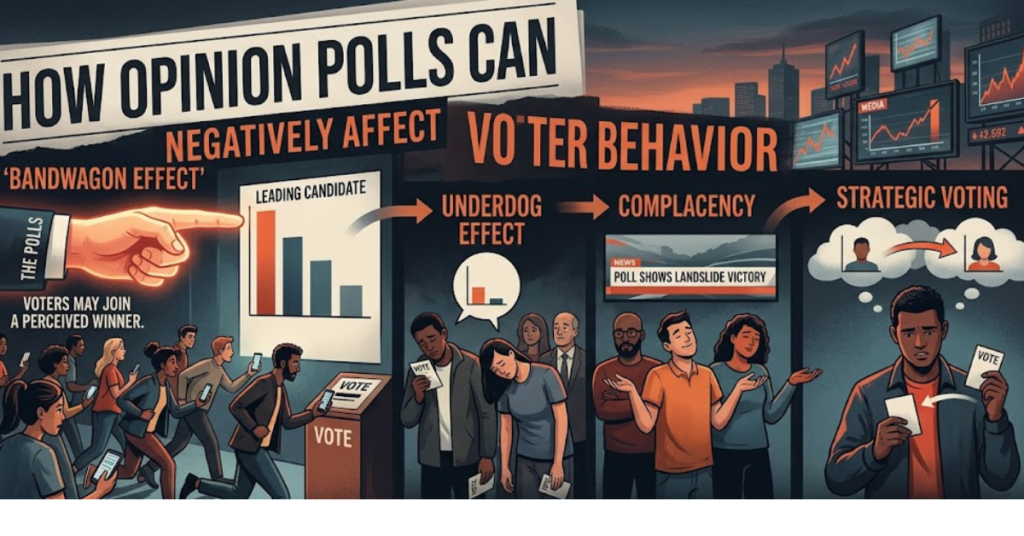

Opinion polls are everywhere during election seasons—on TV, social media, and news websites. They’re designed to measure public sentiment, but many experts argue they can also shape it. So, how might opinion polls negatively affect voter behaviors?
While polls provide insights into trends, they can influence voters in subtle and sometimes harmful ways. From creating a “bandwagon effect” to discouraging turnout, opinion polls may alter democratic participation more than we realize. In this article, we’ll break down the key ways polls can negatively impact voters and why this matters for fair elections.
What Are Opinion Polls and Why Do They Matter?
Opinion polls are surveys conducted to gauge public opinion about candidates, policies, or political issues. They’re often used by:
- Media outlets
- Political campaigns
- Research organizations
While they aim to reflect public sentiment, polls can also influence behavior—especially when voters use them as shortcuts to decide whom to support.
How Might Opinion Polls Negatively Affect Voter Behaviors?
Here are the most common ways opinion polls can shape voter behavior in negative ways.
The Bandwagon Effect
The bandwagon effect occurs when voters support a candidate simply because they appear to be winning.
- People may want to “join the winning side”
- Media coverage amplifies leading candidates
- Undecided voters shift their preferences
This effect can distort genuine public opinion and give frontrunners an unfair advantage.
The Underdog Effect
Interestingly, the opposite can also happen. Some voters support candidates who appear to be losing.
- Sympathy for trailing candidates
- Desire to balance competition
- Reaction against perceived dominance
While this may seem positive, it still means decisions are based on polls—not policies.
Voter Apathy and Reduced Turnout
One major concern is that opinion polls can discourage participation.
For example:
- If a race looks decided, voters may stay home
- Supporters of a losing candidate may feel their vote “won’t matter”
- Overconfidence can reduce urgency to vote
This can weaken democratic participation and lead to lower voter turnout.
Strategic Voting
Opinion polls often encourage strategic voting, where voters choose someone other than their preferred candidate.
This happens when:
- A voter’s favorite candidate is polling low
- They switch to a more viable option
- They aim to block another candidate
Strategic voting can reduce diversity in political representation and push elections toward a two-party dynamic.
Influence on Campaign Coverage
Polls heavily influence media coverage, which then affects voters.
- Candidates polling low receive less coverage
- Leading candidates dominate headlines
- Issues get overshadowed by “horse race” narratives
This can limit voters’ exposure to policies and meaningful debate.
Psychological Pressure on Undecided Voters
Opinion polls can create social pressure. People may:
- Align with majority views
- Avoid appearing unpopular
- Follow perceived social norms
This can reduce independent decision-making and informed voting.
Why This Matters for Democracy
When opinion polls shape voter behavior:
- Elections may not reflect true preferences
- Smaller parties struggle to gain support
- Voter engagement declines
- Public discourse becomes superficial
Ultimately, polls can unintentionally influence outcomes rather than simply measure them.
How to Avoid Being Influenced by Opinion Polls
Here are a few practical tips:
- Focus on policies instead of poll numbers
- Research candidates independently
- Avoid relying on one poll
- Vote based on personal values
- Remember polls are estimates, not predictions
Being aware of these influences helps voters make more informed decisions.
FAQs
1. Do opinion polls actually change voter behavior?
Yes. Studies show polls can create bandwagon effects, strategic voting, and voter apathy, all of which influence decision-making.
2. Are opinion polls always harmful?
No. Polls can inform the public, but problems arise when voters rely on them instead of evaluating policies.
3. What is the bandwagon effect in elections?
It’s when voters support a candidate because they appear to be leading in opinion polls.
4. Can polls reduce voter turnout?
Yes. If voters think the outcome is certain, they may feel their vote isn’t necessary.
5. Why do media outlets focus on polls?
Polls generate engagement and simplify complex elections into competitive narratives, but this can overshadow policy discussions.
Conclusion
So, how might opinion polls negatively affect voter behaviors? They can create bandwagon effects, discourage turnout, promote strategic voting, and shift focus away from real issues. While polls are useful tools, relying too heavily on them can weaken democratic decision-making.
The best approach is simple: stay informed, think independently, and vote based on your values—not just the numbers.
If you found this helpful, consider exploring related topics like voter turnout trends, media influence in elections, and political decision-making to deepen your understanding.