
If you’ve ever typed puddy or putty into a search bar, you’re definitely not alone. It’s one of those small spelling dilemmas that trips people up more often than you’d expect. Is it puddy or putty? And what does it actually mean?
In this article, we’ll break down the puddy or putty meaning, explain the correct usage, and explore how this simple word shows up in everyday life—from home repairs to creative crafts. By the end, you’ll not only know the right spelling but also understand how and when to use it naturally.
Puddy or Putty: What’s the Correct Spelling?
Let’s clear this up right away:
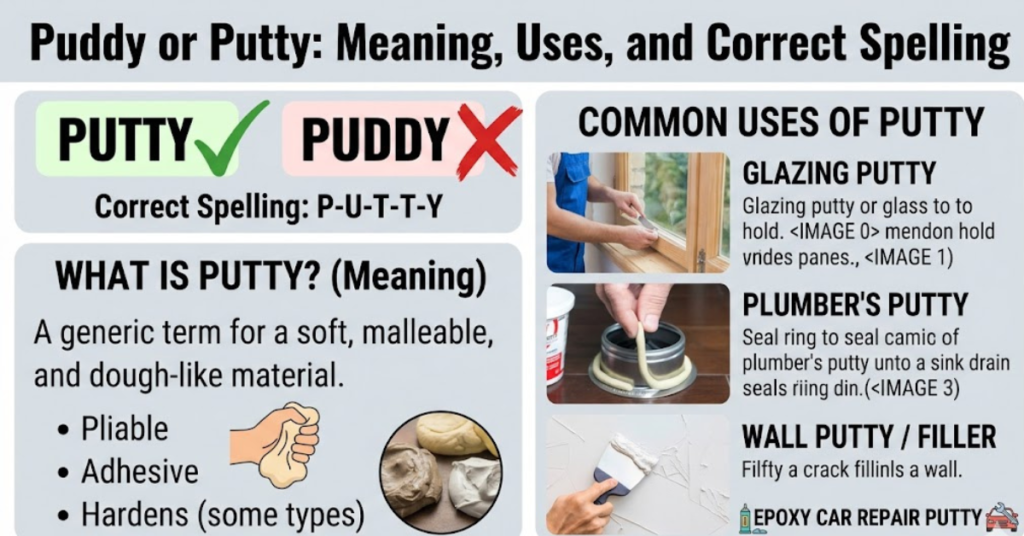
- Putty is the correct spelling
- Puddy is a common misspelling
So if you’ve been wondering is it puddy or putty, the answer is simple—putty is the proper word recognized in English dictionaries.
Why Do People Confuse the Two?
There are a few reasons this mix-up happens:
- The pronunciation sounds similar in many accents
- Autocorrect sometimes doesn’t catch informal spellings
- “Puddy” appears in pop culture or casual writing
But in formal writing, professional communication, or SEO content, “putty” is always the right choice.
Putty Meaning: What Does It Actually Refer To?
The puddy or putty meaning depends on the context, but generally, putty refers to a soft, moldable material.
Common Definitions of Putty:
- Construction Material
A paste-like substance used to seal gaps, especially around windows. - Craft and DIY Material
A flexible compound used in art projects or repairs. - Figurative Meaning
Used metaphorically, as in “someone is like putty in your hands,” meaning easily influenced.
Types of Putty and Their Uses
Putty isn’t just one thing—it comes in several forms, each designed for a specific purpose.
1. Glazing Putty
Used mainly in window installation to hold glass panes in place.
2. Wall Putty
A popular material in construction for smoothing walls before painting.
3. Epoxy Putty
A strong adhesive putty used for repairs in plumbing, metalwork, and more.
4. Silly Putty
A fun, stretchy toy that bounces and molds easily—great for kids and stress relief.
How Putty Is Used in Everyday Life
Putty might seem like a niche product, but it’s surprisingly common.
Practical Uses:
- Sealing cracks and gaps in walls
- Fixing broken household items
- Preparing surfaces for paint
- Waterproofing small areas
Creative Uses:
- DIY crafts and sculptures
- Kids’ play and sensory activities
- Temporary fixes for small objects
Is It Puddy or Putty in Informal Writing?
While putty is correct, you might still see puddy in:
- Casual texting or slang
- Social media posts
- Fictional dialogue
However, for clarity and credibility—especially in blogs, articles, or professional content—stick with “putty.”
Common Mistakes to Avoid
When dealing with puddy or putty, here are a few pitfalls to watch out for:
- Using “puddy” in formal writing
- Assuming both spellings are interchangeable
- Ignoring context (material vs metaphor)
A simple rule: if you’re referring to a substance or using the word seriously, it’s always putty.
FAQs About Puddy or Putty
1. Is it puddy or putty?
The correct spelling is putty. “Puddy” is a misspelling and should be avoided in formal use.
2. What is the meaning of putty?
Putty is a soft, moldable material used for sealing, fixing, or crafting. It can also be used metaphorically.
3. Why do people write puddy instead of putty?
It’s usually due to pronunciation similarities or informal typing habits.
4. Can puddy ever be correct?
Not in standard English. It may appear in slang or fictional contexts but isn’t considered correct.
5. What are the main uses of putty?
Putty is used in construction, repairs, painting preparation, and even toys or crafts.
Conclusion
The confusion around puddy or putty is common, but the answer is straightforward—putty is the correct spelling and widely accepted term. Whether you’re talking about sealing a window, fixing a crack, or describing someone as easily influenced, using the right word makes your communication clearer and more professional.
Now that you understand the puddy or putty meaning, you can confidently use “putty” in the right context. If you’re interested in DIY projects or home improvement, exploring different types of putty might even open up some practical possibilities for you.
Keep learning, stay curious, and don’t let small spelling doubts hold you back.