
What if the secret to growing your savings wasn’t earning more—but changing when you save? Many people struggle to put money aside because they save whatever is left at the end of the month… which often ends up being nothing. That’s where the concept of how could you make sure that you are paying yourself first regularly and building up your savings comes in.
Paying yourself first means treating savings like a non-negotiable bill. Before you spend on anything else, you set aside a portion of your income. This simple shift can help you build financial security, reduce stress, and reach your long-term goals faster. In this guide, we’ll break down practical steps, strategies, and tools to make saving automatic and consistent.
What Does “Pay Yourself First” Really Mean?
The “pay yourself first” strategy flips traditional budgeting. Instead of:
- Earn money
- Pay bills
- Spend on wants
- Save leftovers
You follow this order:
- Earn money
- Save first
- Pay bills
- Spend what remains
This approach ensures your savings grow consistently, regardless of unexpected expenses.
Why Paying Yourself First Helps Build Savings
Understanding how could you make sure that you are paying yourself first regularly and building up your savings starts with knowing why it works.
Key Benefits
- Builds disciplined saving habits
- Reduces temptation to overspend
- Helps create an emergency fund faster
- Encourages long-term investing
- Improves financial confidence
When savings become automatic, you remove the need for willpower.
Step-by-Step: How to Pay Yourself First Regularly
1. Set a Realistic Savings Percentage
Start with an amount you can maintain. Common recommendations:
- 10% of your income (ideal starting point)
- 5% if your budget is tight
- Increase gradually over time
Even small amounts matter. Consistency beats size.
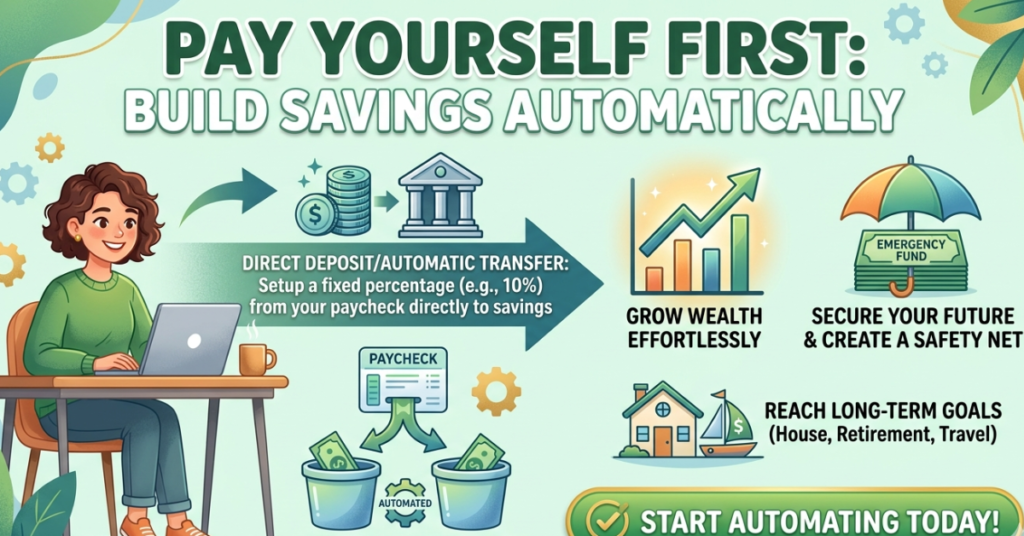
2. Automate Your Savings
Automation is one of the most effective answers to how could you make sure that you are paying yourself first regularly and building up your savings.
Set up:
- Automatic bank transfers
- Direct deposit split into savings
- Recurring investment contributions
Once automated, you don’t have to think about it.
3. Use Separate Accounts
Keep savings out of sight to avoid spending temptation:
- Emergency fund account
- Long-term savings account
- Investment account
This separation helps you track goals and stay motivated.
4. Treat Savings Like a Fixed Expense
Think of savings as a monthly bill—just like rent or electricity.
If it’s mandatory, you’ll adjust spending elsewhere.
5. Increase Savings When Income Grows
Whenever you:
- Get a raise
- Earn bonuses
- Start a side hustle
Increase your savings rate before lifestyle inflation kicks in.
Smart Strategies to Build Savings Faster
Use the 50/30/20 Rule
This budgeting framework helps balance spending:
- 50% Needs
- 30% Wants
- 20% Savings
You can adjust the percentages based on your situation.
Save Windfalls Immediately
Tax refunds, gifts, and bonuses are perfect opportunities to boost savings. Deposit at least half before spending.
Round-Up Savings Method
Some banking apps round purchases and save the difference:
- Buy coffee for $2.70
- Rounded to $3.00
- $0.30 goes to savings
It’s small but powerful over time.
Common Mistakes to Avoid
When learning how could you make sure that you are paying yourself first regularly and building up your savings, avoid these pitfalls:
- Saving only when convenient
- Keeping savings in your main spending account
- Setting unrealistic savings goals
- Not tracking progress
- Stopping after unexpected expenses
Consistency matters more than perfection.
Tools That Help You Pay Yourself First
Consider using:
- Automatic bank transfers
- Budgeting apps
- Payroll direct deposit splits
- Investment auto-contributions
- High-yield savings accounts
These tools remove friction and help you stay disciplined.
How Much Should You Save?
A general guideline:
- Emergency fund: 3–6 months of expenses
- Retirement: 10–15% of income
- Short-term goals: Based on timeline
Start small and increase gradually.
FAQs
What does paying yourself first mean?
It means saving a portion of your income before paying bills or spending on discretionary items.
How much should I pay myself first?
Start with 5–10% of your income and increase over time.
Is paying yourself first better than budgeting?
It complements budgeting. Paying yourself first ensures savings happen automatically.
Can I pay myself first with a low income?
Yes. Even small amounts like $10–$20 per week can build savings over time.
Should I invest or save first?
Start with an emergency fund, then move to investing for long-term growth.
Conclusion
Learning how could you make sure that you are paying yourself first regularly and building up your savings is one of the smartest financial moves you can make. By automating transfers, setting realistic goals, and treating savings as a priority, you create a habit that grows wealth quietly over time.