
A cast iron skillet can last a lifetime—if you take care of it the right way. Many people worry about ruining the seasoning or damaging the surface, but learning how to clean a cast iron skillet is actually simpler than it seems. With the right approach, you can keep your skillet nonstick, rust-free, and ready for every meal.
Why Proper Cleaning Matters
Cast iron is different from other cookware. It develops a natural nonstick layer called seasoning, which needs protection.
Benefits of Proper Cleaning
- Maintains the nonstick surface
- Prevents rust and corrosion
- Extends the skillet’s lifespan
- Improves flavor over time
Treat your skillet well, and it will only get better with age.
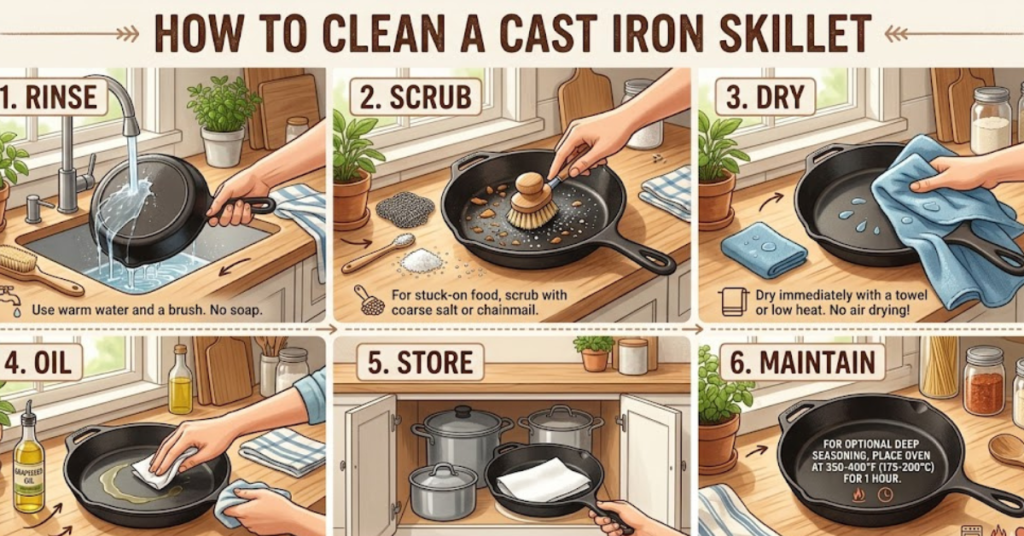
How to Clean a Cast Iron Skillet After Use
Cleaning right after cooking is the easiest and most effective method.
Step-by-Step Guide
- Let it cool slightly
Avoid cleaning while it’s extremely hot to prevent warping. - Rinse with warm water
Use a soft sponge or brush to remove food residue. - Scrub gently
For stuck bits, use a non-metal brush or scraper. - Dry immediately
Use a towel or heat it on the stove to remove all moisture. - Apply a light oil coating
Rub a thin layer of oil to protect the surface.
This routine keeps your skillet clean without damaging the seasoning.
How to Clean a Cast Iron Skillet with Salt
Salt is a natural abrasive that works well for stubborn food.
Simple Method
- Sprinkle coarse salt into the pan
- Use a cloth or paper towel to scrub
- Rinse lightly and dry thoroughly
This technique is especially helpful when dealing with sticky or greasy residue.
How to Clean a Cast Iron Skillet with Burnt-On Food
Burnt food can be tricky, but it’s not a lost cause.
Effective Steps
- Add a small amount of water to the skillet
- Heat it on the stove to loosen debris
- Scrape gently with a spatula
- Rinse and dry as usual
For tougher cases, repeat the process rather than scrubbing aggressively.
How to Clean a Cast Iron Skillet with Baking Soda
Baking soda is useful for deeper cleaning without being too harsh.
How to Use It
- Mix baking soda with a little water to form a paste
- Apply to problem areas
- Scrub gently and rinse
This method works well for removing odors and light stains.
How to Clean a Cast Iron Skillet with Rust
Rust can look alarming, but it’s fixable.
Step-by-Step Rust Removal
- Scrub the rust
Use steel wool or a stiff brush to remove affected areas - Wash with warm water
Clean away debris - Dry completely
Moisture is the main cause of rust - Reseason the skillet
Apply oil and heat in the oven to restore the protective layer
How to Clean and Reseason Your Skillet
If your skillet has lost its seasoning, it’s time to restore it.
Reseasoning Process
- Preheat your oven to 200°C (around 400°F)
- Apply a thin layer of oil to the entire skillet
- Place it upside down in the oven
- Bake for one hour
- Let it cool inside the oven
This process rebuilds the nonstick surface and protects against rust.
Cleaning Before First Use
New cast iron cookware often needs preparation.
What to Do
- Wash with warm water and mild soap (once only)
- Dry thoroughly
- Apply oil and heat to season
This sets the foundation for long-term use.
Cleaning Tips for Specific Situations
Different cooking situations may require slight adjustments.
After Cooking Steak
- Remove grease while warm
- Use salt or a scraper for residue
- Reapply oil after cleaning
While Camping
- Wipe with a cloth or paper towel
- Use minimal water
- Dry over fire or heat source
Using Lemon or Vinegar
- Use sparingly, as acids can strip seasoning
- Always reseason afterward
Common Mistakes to Avoid
Even small mistakes can damage your skillet over time.
- Soaking the skillet in water
- Using harsh detergents regularly
- Letting it air dry
- Skipping the oiling step
Avoiding these habits keeps your skillet in top condition.
FAQs
1. Can I use soap on a cast iron skillet?
Yes, but only occasionally and in small amounts. Frequent use can strip the seasoning.
2. What’s the best way to remove burnt food?
Heat water in the skillet to loosen debris, then scrape gently.
3. How do I prevent rust?
Dry the skillet immediately after washing and apply a light coat of oil.
4. Can I put cast iron in the dishwasher?
No, dishwashers can damage the seasoning and cause rust.
5. How often should I reseason my skillet?
Only when the surface looks dull, dry, or starts sticking.
Conclusion
Learning how to clean a cast iron skillet doesn’t require complicated tools or techniques—just consistency and care. Whether you’re dealing with everyday residue, burnt food, or rust, the right method will keep your skillet in excellent shape. With regular cleaning and occasional reseasoning, your cast iron can last for generations.
Make it part of your cooking routine, and you’ll enjoy better performance, richer flavors, and a pan that only improves with time.