

A tiny splinter might seem like a small problem—until every touch reminds you it’s there. Whether it’s lodged in your finger, foot, or hidden under the skin, knowing how to remove a splinter the right way can save you pain, prevent infection, and speed up healing.
Splinters are common, especially after handling wood, walking barefoot, gardening, or touching rough surfaces. While some come out easily, others can be deep, nearly invisible, or stuck under a fingernail. In this guide, you’ll learn exactly how to remove a splinter, including methods for stubborn splinters and situations when you should see a doctor.
What Is a Splinter?
A splinter is a small fragment of material—usually wood, glass, metal, plastic, or thorn—that becomes embedded in the skin. Even tiny splinters can cause:
- Pain
- Redness
- Swelling
- Infection
- Difficulty using the affected area
The faster you remove it safely, the better.
How to Remove a Splinter Step by Step
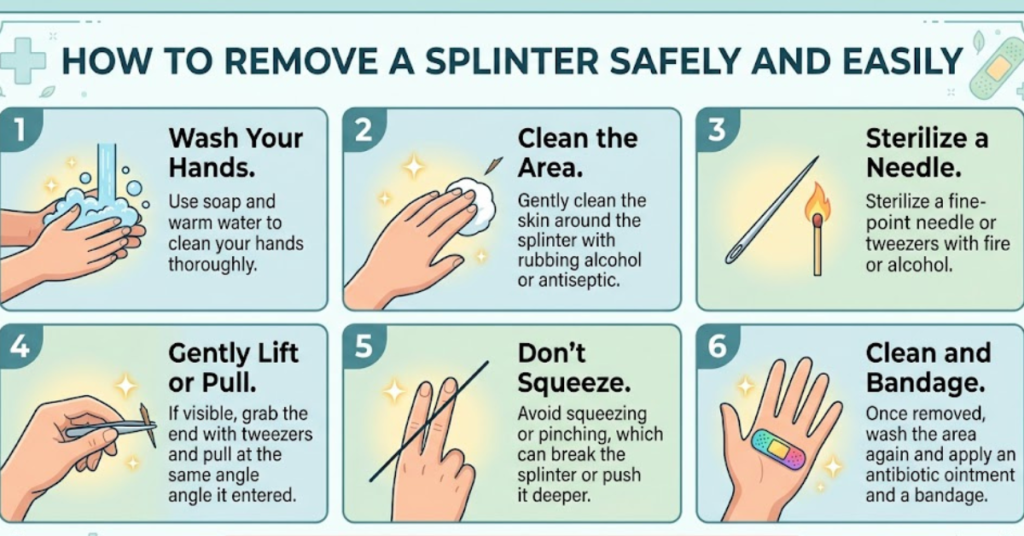
Before trying any removal method, wash your hands and clean the affected area with warm water and mild soap.
What You’ll Need
Depending on the splinter, you may need:
- Clean tweezers
- A sterilized needle
- Magnifying glass
- Soap and warm water
- Rubbing alcohol
- Bandage
- Antibiotic ointment
How to Remove a Splinter with Tweezers
This is the best method when part of the splinter is sticking out.
Step-by-Step Instructions
- Wash your hands thoroughly.
- Clean the skin around the splinter.
- Sterilize tweezers with rubbing alcohol.
- Gently grab the exposed end of the splinter.
- Pull it out slowly in the same direction it entered.
- Wash the area again.
- Apply antibiotic ointment and a bandage if needed.
Avoid squeezing the skin too hard, as this can push the splinter deeper.
How to Remove a Splinter Without Tweezers
Sometimes tweezers aren’t available—or the splinter is too small to grab.
Try the Tape Method
For shallow splinters:
- Press strong adhesive tape over the area.
- Let it stick for a few seconds.
- Pull it off gently in the opposite direction.
This works well for fine splinters like fiberglass.
Use Baking Soda Paste
This can help bring the splinter to the surface.
- Mix baking soda with a few drops of water.
- Apply the paste to the area.
- Cover with a bandage.
- Leave it for 24 hours.
The skin may swell slightly, making the splinter easier to remove.
This is a popular answer for how to remove a splinter without tweezers.
How to Remove a Splinter You Can’t See
A hidden splinter can be frustrating and painful.
Signs of an Invisible Splinter
- Sharp pain when touching the area
- Redness without visible cause
- Swelling
- Tenderness
- A small dark spot under the skin
What to Do
- Soak the area in warm water for 10–15 minutes.
- Use a magnifying glass under bright light.
- Gently inspect with a sterilized needle.
- Lift the skin slightly if needed—don’t dig deeply.
If you’re unsure, avoid excessive probing. This is the safest approach for how to remove a splinter you can’t see.
How to Remove a Splinter Under the Skin
Deep splinters require extra care.
Safe Removal Method
- Soak the area to soften the skin.
- Sterilize a needle with rubbing alcohol.
- Gently lift the top layer of skin.
- Expose enough of the splinter to grab it.
- Use tweezers to pull it out slowly.
This method works best for how to remove a splinter under the skin, but only if the splinter is reachable.
Never dig aggressively—this increases infection risk.
How to Remove a Splinter from Your Finger
Finger splinters are among the most common.
Tips for Finger Splinters
- Keep your hand steady
- Use bright lighting
- Pull in the same direction the splinter entered
- Avoid pinching too hard
Whether you search for how to remove a splinter from your finger or how to remove a splinter from finger, the process is the same—gentle and precise removal.
How to Remove a Splinter from Foot
Foot splinters can be painful because of constant pressure while walking.
Best Method for Foot Splinters
- Soak your foot in warm, soapy water
- Dry thoroughly
- Use a sterilized needle if necessary
- Pull gently with tweezers
- Apply antiseptic and cover
Knowing how to remove a splinter from foot is especially important because foot wounds can become irritated quickly.
Avoid walking barefoot until it heals.
How to Remove a Splinter from Under a Fingernail
This type is especially painful and delicate.
Safe Nail Splinter Removal
- Soak the finger in warm water
- Trim the nail slightly if it helps visibility
- Use sterilized tweezers if the splinter is exposed
- If deeply lodged, do not force removal
For how to remove a splinter from under a fingernail, medical help may be the safest option if the splinter is deep or causes bleeding.
When to See a Doctor
You should seek medical care if:
- The splinter is deeply embedded
- It’s near the eye
- You suspect glass or metal fragments
- There’s pus, swelling, or infection
- You can’t remove it safely
- The splinter is under the nail and painful
- Your tetanus shot is outdated
Ignoring an infected splinter can lead to bigger problems.
How to Prevent Splinters
Prevention is always easier than removal.
Simple Prevention Tips
- Wear gloves while gardening or handling wood
- Use shoes outdoors
- Sand rough wooden surfaces
- Keep floors clean of broken glass or debris
- Inspect children’s toys and furniture
FAQs
How do you remove a splinter that is too deep?
Soak the area first and use a sterilized needle to gently expose the splinter. If it’s too deep or painful, see a doctor instead of digging further.
Can a splinter come out on its own?
Yes, sometimes the body pushes a small splinter to the surface naturally. Warm soaks can help speed up the process.
Is it bad to leave a splinter in?
Yes, leaving a splinter in can cause pain, inflammation, and infection—especially if it’s made of wood or organic material.
How do I remove a splinter without pain?
Soaking the area in warm water helps soften the skin and reduce discomfort. Work slowly and use clean tools.
What happens if part of the splinter breaks off?
If part remains under the skin, keep the area clean and monitor for signs of infection. If pain continues, seek medical attention.
Conclusion
Learning how to remove a splinter properly can save you discomfort and prevent infection. Whether you’re dealing with how to remove a splinter without tweezers, figuring out how to remove a splinter from foot, or handling a painful splinter under a fingernail, the key is patience, cleanliness, and gentle technique.
Don’t rush or dig too aggressively—sometimes the safest move is getting professional help. For more practical health and home care guides, explore related articles and keep your first-aid knowledge sharp.