
Small vessel disease can feel confusing and even a little frightening—especially when you’re trying to understand how quickly does small vessel disease progress. Some people notice changes slowly over many years, while others experience symptoms sooner. The truth is, progression varies widely depending on risk factors, lifestyle, and early treatment.
In this guide, we’ll break down the timeline, warning signs, and what actually influences progression. By the end, you’ll have a clear, practical understanding of what to expect and what you can do to slow it down.
What Is Small Vessel Disease?
Small vessel disease (SVD), often called cerebral small vessel disease, affects the tiny blood vessels in the brain. Over time, these vessels can become narrowed, stiff, or damaged, reducing blood flow.
This can lead to:
- Memory problems
- Slower thinking
- Balance issues
- Mood changes
- Stroke risk
It’s commonly linked to aging, but conditions like high blood pressure and diabetes can speed things up.
How Quickly Does Small Vessel Disease Progress?
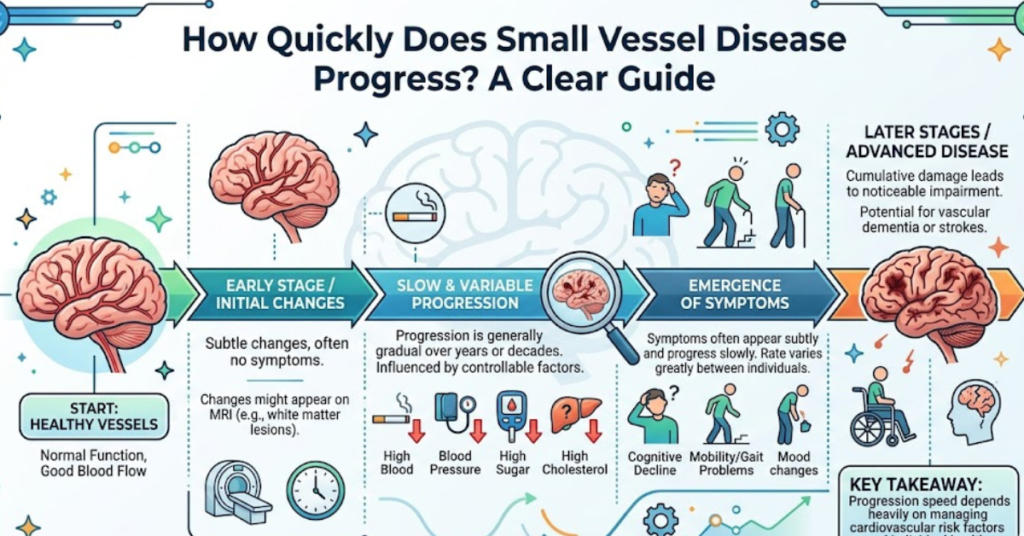
The short answer: small vessel disease usually progresses slowly — over years or even decades. However, progression speed depends heavily on individual health factors.
Typical Progression Timeline
While there’s no universal timeline, research and clinical experience suggest:
- Early stage: Often silent; changes visible only on MRI
- Mild symptoms: May appear gradually over 3–5 years
- Moderate stage: Noticeable cognitive and mobility issues over 5–10 years
- Advanced stage: Increased stroke risk or vascular dementia over 10+ years
Some people remain stable for long periods, especially with treatment. Others may experience faster progression if risk factors aren’t controlled.
Factors That Affect Progression Speed
Several key factors influence how quickly small vessel disease progresses. Think of them as “accelerators” or “brakes.”
Factors That May Speed It Up
- High blood pressure (biggest risk factor)
- Diabetes
- Smoking
- High cholesterol
- Obesity
- Lack of physical activity
- Chronic stress
- Poor sleep
Factors That May Slow Progression
- Controlled blood pressure
- Regular exercise
- Healthy diet (Mediterranean-style)
- Managing diabetes
- Quitting smoking
- Cognitive stimulation
- Good sleep habits
Even small lifestyle changes can make a measurable difference.
Early Signs That Progression May Be Occurring
Small vessel disease doesn’t usually worsen overnight. Watch for gradual changes such as:
- Slower thinking or processing speed
- Trouble focusing
- Mild memory lapses
- Balance problems
- Frequent small falls
- Mood changes or apathy
These symptoms often develop subtly, which is why regular monitoring is helpful.
Can Small Vessel Disease Suddenly Get Worse?
Yes — but usually only in certain situations.
Progression may appear sudden if:
- A small stroke occurs
- Blood pressure spikes
- There’s uncontrolled diabetes
- Medication isn’t followed
- New vascular damage develops
Otherwise, most progression is gradual and steady.
Stages of Small Vessel Disease
Understanding stages helps clarify progression speed.
Stage 1: Silent Changes
- No symptoms
- MRI shows white matter changes
- May remain stable for years
Stage 2: Mild Cognitive Effects
- Slight memory problems
- Slower thinking
- Mild balance issues
Stage 3: Functional Impact
- Walking difficulties
- Noticeable cognitive decline
- Increased fall risk
Stage 4: Advanced Disease
- Possible vascular dementia
- Mobility limitations
- Higher stroke risk
Not everyone reaches advanced stages, especially with proper management.
How Doctors Monitor Progression
Doctors track progression using:
- MRI scans
- Cognitive testing
- Blood pressure monitoring
- Neurological exams
- Symptom tracking
Changes between scans often occur slowly, sometimes over several years.
Can You Slow Down Small Vessel Disease?
Yes — and this is the most important takeaway.
You can slow progression by:
- Keeping blood pressure below recommended levels
- Exercising at least 150 minutes per week
- Eating fruits, vegetables, whole grains, and healthy fats
- Stopping smoking
- Managing cholesterol
- Controlling blood sugar
- Staying mentally active
These steps can significantly delay symptoms.
When to See a Doctor
Seek medical advice if you notice:
- Sudden confusion
- Weakness on one side
- Trouble speaking
- Frequent falls
- Rapid memory decline
These may indicate stroke or faster progression.
FAQs About Small Vessel Disease Progression
Does small vessel disease always get worse?
Not always. Some people remain stable for years, especially with good risk factor control.
How quickly does small vessel disease progress in elderly patients?
Progression is typically slow, but it may be faster if conditions like hypertension or diabetes are present.
Can small vessel disease be reversed?
Damage usually cannot be reversed, but progression can often be slowed significantly.
Is small vessel disease life-threatening?
It’s usually not immediately life-threatening, but it increases stroke and dementia risk over time.
What is the average life expectancy?
Many people live normal lifespans, especially with proper management and monitoring.
Conclusion
So, how quickly does small vessel disease progress? In most cases, it develops slowly over years, not months. The pace depends heavily on health conditions, lifestyle choices, and early treatment. The encouraging news is that progression can often be slowed with simple, consistent changes.
If you or someone you care about has been diagnosed, focus on managing blood pressure, staying active, and maintaining overall vascular health. Small steps today can make a big difference tomorrow.