

Eggs are one of the most popular and affordable sources of high-quality protein. Whether you’re trying to build muscle, lose weight, or simply eat healthier, you’ve probably wondered how much protein in an egg and whether the yolk contributes to that total.
The short answer? A single large egg contains about 6–7 grams of protein, but there’s more to the story. In this guide, we’ll break down how much protein in an egg yolk, egg whites, different egg sizes, and why eggs are considered a nutritional powerhouse.
How Much Protein in an Egg? Quick Answer
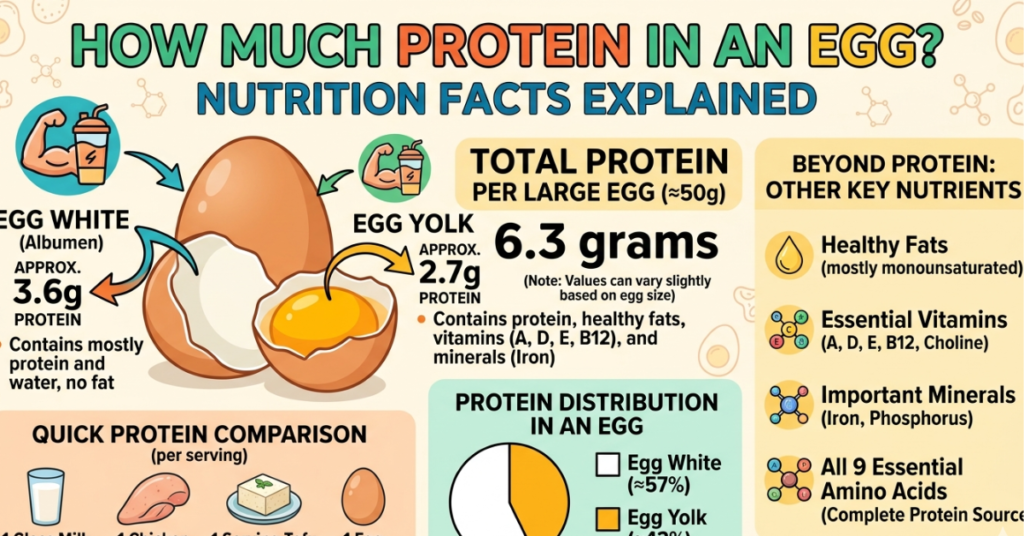
A large whole egg (about 50 grams) contains approximately:
- Protein: 6.3 grams
- Calories: 70–78
- Fat: 5 grams
- Carbohydrates: Less than 1 gram
Here’s a quick breakdown by egg size:
| Egg Size | Protein Content |
| Small egg | 4.8 grams |
| Medium egg | 5.5 grams |
| Large egg | 6.3 grams |
| Extra-large egg | 7 grams |
| Jumbo egg | 7.9 grams |
So if you’re tracking macros, knowing the egg size can slightly change your protein intake.
How Much Protein in an Egg Yolk?
Many people assume all the protein is in the egg white, but the egg yolk also contains protein.
- Egg yolk protein: About 2.7 grams
- Egg white protein: About 3.6 grams
That means nearly 40% of the protein in an egg comes from the yolk.
Besides protein, the yolk is packed with nutrients like:
- Vitamin D
- Vitamin B12
- Choline
- Healthy fats
- Antioxidants (lutein and zeaxanthin)
So skipping the yolk means missing out on valuable nutrition.
Egg White vs. Whole Egg: Which Has More Protein?
Here’s a quick comparison:
Egg White
- 3.6 grams protein
- Almost no fat
- Very low calories
- Pure protein source
Whole Egg
- 6.3 grams protein
- Healthy fats
- More vitamins and minerals
- More filling
If you’re focused purely on protein with fewer calories, egg whites work well. But for overall nutrition, whole eggs are the better choice.
Why Egg Protein Is Considered High Quality
Eggs are often used as the gold standard for protein quality. That’s because they contain all nine essential amino acids your body needs.
Benefits of egg protein include:
- Supports muscle growth and repair
- Helps with weight management
- Keeps you full longer
- Supports brain health
- Improves metabolism
Egg protein also has high bioavailability, meaning your body absorbs and uses it efficiently.
How Much Protein in Different Egg Dishes?
Cooking method doesn’t significantly change protein content. Here’s what you can expect:
- Boiled egg: 6.3 grams
- Fried egg: 6–7 grams (depends on oil)
- Scrambled egg: 6–7 grams per egg
- Poached egg: 6.3 grams
- Omelet (2 eggs): 12–14 grams
Adding cheese, vegetables, or meat increases total protein.
How Many Eggs Should You Eat for Protein?
Your needs depend on your goals:
- General health: 1–2 eggs per day
- Muscle building: 2–4 eggs per day
- Weight loss: 2 eggs for a high-protein breakfast
- Athletes: 3–6 eggs depending on total diet
Eggs are affordable and easy to include in meals, making them ideal for boosting daily protein intake.
Are Eggs Good for Weight Loss?
Yes, eggs are excellent for weight loss because they:
- Are high in protein
- Keep you full longer
- Reduce snacking
- Support metabolism
A protein-rich breakfast with eggs can help control appetite throughout the day.
FAQs About How Much Protein in an Eggs
How much protein in one eggs?
A large eggs contains about 6–7 grams of protein.
How much protein in an eggs yolk?
An eggs yolk contains approximately 2.7 grams of protein.
How much protein in egg white?
Eggs whites contain around 3.6 grams of protein.
Is it better to eat egg whites or whole eggs?
Whole eggs are better nutritionally, while egg whites are lower in calories and fat.
How many eggs equal 20 grams of protein?
You would need about 3 large eggs to reach roughly 19–20 grams of protein.
Do boiled eggs lose protein?
No, boiling does not significantly reduce protein content.
Conclusion
So, how much protein in an egg? A single large egg provides about 6.3 grams of high-quality protein, with both the white and yolk contributing valuable nutrients. While egg whites are leaner, the yolk contains nearly 40% of the protein plus essential vitamins and healthy fats.
Whether you’re building muscle, managing weight, or just improving your diet, eggs are one of the easiest and most nutritious protein sources available. Try adding them to breakfast, salads, or snacks to boost your daily protein intake naturally.