
Wallpaper can completely transform a room—but when it starts peeling, fading, or simply feels outdated, removing it becomes the next big project. If you’re wondering how to remove wallpaper without destroying your walls, you’re not alone.
The good news? Whether you’re dealing with stubborn wallpaper glue, old wallpaper borders, or delicate drywall, the process can be much easier than you think. In this guide, we’ll cover everything from how to remove wallpaper from wall surfaces to how to remove wallpaper with a steamer, and even quick tips for how to remove wallpaper on iPhone if you’re talking digital wallpaper instead of home décor.
Let’s get started
Why Proper Wallpaper Removal Matters
Removing wallpaper the wrong way can lead to:
- Torn drywall
- Damaged plaster
- Sticky glue residue
- Uneven paint surfaces
- Expensive repair costs
Taking the right steps helps protect your walls and makes repainting or re-wallpapering much smoother.
Tools You Need to Remove Wallpaper
Before learning how to remove wallpaper from drywall, gather these supplies:
Essential Tools
- Putty knife or scraper
- Spray bottle
- Warm water
- Dish soap
- White vinegar
- Sponge
- Drop cloths
- Painter’s tape
- Gloves
- Trash bags
Optional Tools
- Wallpaper scoring tool
- Wallpaper steamer
- Commercial wallpaper remover
- Ladder for high areas
Preparation saves time and prevents unnecessary mess.
How to Remove Wallpaper from Wall: Step-by-Step
Here’s the safest and most effective method for standard wallpaper removal.
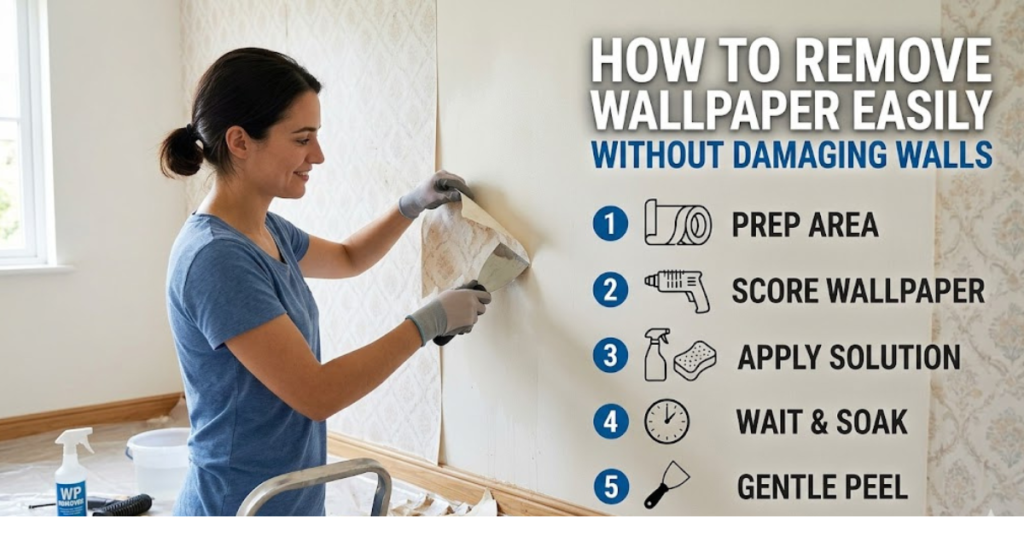
Step 1: Protect the Room
Cover floors and furniture with drop cloths. Turn off electricity if working near outlets and cover sockets with painter’s tape.
This prevents water damage and keeps your workspace safe.
Step 2: Test a Corner
Use a putty knife to lift one corner of the wallpaper.
If it peels easily, you may have strippable wallpaper. If it tears into small pieces, it likely needs soaking or steaming.
This step helps determine the best removal method.
Step 3: Score the Wallpaper (If Needed)
Use a wallpaper scoring tool lightly over the surface.
This creates tiny holes so water or remover can soak through to the adhesive. Avoid pressing too hard, especially on drywall.
Step 4: Apply Removal Solution
Mix:
- Warm water
- A few drops of dish soap
- 1 cup white vinegar
Spray generously over the wallpaper and let it sit for 10–15 minutes.
This softens the glue for easier removal.
Step 5: Scrape Gently
Start at a loose corner and carefully scrape using a putty knife.
Always work slowly to avoid damaging the wall underneath
How to Remove Wallpaper Glue
Even after wallpaper is gone, sticky residue often remains. Knowing how to remove wallpaper glue is essential before painting.
Best Method for Glue Removal
Mix:
- Hot water
- Dish soap
- Baking soda (optional)
Use a sponge to scrub the wall gently.
For stubborn spots:
- Apply white vinegar
- Let it sit for 10 minutes
- Wipe clean
Rinse with clean water and allow the wall to dry completely.
Skipping this step can ruin fresh paint
How to Remove Wallpaper Border
Wallpaper borders can be surprisingly stubborn.
Step-by-Step Border Removal
- Lift a corner with a putty knife
- Pull slowly at a 45-degree angle
- Spray warm water if it resists
- Use vinegar solution for leftover adhesive
If the border was installed over painted walls, extra care helps prevent peeling paint.
This is the safest way for how to remove wallpaper border without creating wall damage.
How to Remove Wallpaper with a Steamer
For older wallpaper or heavy adhesive, steaming is often the fastest solution.
Using a Wallpaper Steamer
- Fill the steamer with water
- Wait for it to heat fully
- Hold the steam plate against the wall for 20–30 seconds
- Remove and scrape immediately
Pros of Steam Removal
- Faster for stubborn wallpaper
- Softens strong adhesive
- Great for multiple wallpaper layers
Caution
Too much steam can damage drywall, so don’t overheat one spot.
This is the best method for how to remove wallpaper with a steamer.
How to Remove Wallpaper Without a Steamer
No steamer? No problem.
DIY Method Without Special Tools
Use:
- Hot water
- Vinegar
- Dish soap
- Fabric softener (optional)
Spray the wall several times and allow soaking between applications.
This method works well for most homeowners looking for how to remove wallpaper without a steamer on a budget.
How to Remove Wallpaper from Drywall Safely
Drywall requires extra caution because it damages easily.
Important Tips
- Never scrape aggressively
- Use minimal scoring
- Keep walls damp, not soaked
- Work in small sections
Learning how to remove wallpaper from drywall properly prevents gouges and paper tears.
If drywall gets damaged, patching and sanding may be needed before repainting.
How to Remove Wallpaper on iPhone
Sometimes people search for wallpaper removal but mean phone backgrounds.
Here’s how to remove wallpaper on iPhone quickly.
For iOS 16 and Newer
- Unlock your iPhone
- Long-press the Lock Screen
- Swipe to the wallpaper you want to remove
- Swipe up
- Tap the trash icon
To Change Wallpaper Instead
Go to:
Settings > Wallpaper > Add New Wallpaper
This also works for users searching how to remove wallpaper from iPhone.
Common Mistakes to Avoid
Avoid these common wallpaper removal mistakes:
- Scraping too hard
- Skipping glue removal
- Using too much water on drywall
- Not testing a small area first
- Painting before walls fully dry
Patience saves both time and money.
FAQs
How long does it take to remove wallpaper?
It depends on the wallpaper type and wall size. A single room can take anywhere from 2 to 8 hours.
Can I paint over wallpaper instead of removing it?
Technically yes, but it’s not recommended. Wallpaper seams and glue often show through paint over time.
What is the easiest way to remove old wallpaper?
Using a wallpaper steamer is usually the easiest method for stubborn or older wallpaper.
Does vinegar really help remove wallpaper glue?
Yes. White vinegar helps break down adhesive naturally and works well with warm water.
Can wallpaper removal damage drywall?
Yes, especially if scraped too aggressively. Proper soaking and gentle removal reduce the risk.
Is fabric softener good for wallpaper removal?
Many DIYers use diluted fabric softener because it helps soften adhesive and makes wallpaper easier to peel.
Conclusion
Learning how to remove wallpaper doesn’t have to feel overwhelming. Whether you’re tackling old wallpaper borders, stubborn glue, delicate drywall, or figuring out how to remove wallpaper from wall surfaces without damage, the key is patience and the right technique.
If you have a steamer, the process can move faster. If not, warm water and vinegar often work surprisingly well. And if you’re just trying to update your phone, removing wallpaper on iPhone takes only seconds.
Take your time, work carefully, and your walls will be ready for a fresh new look. Whether you’re painting, redecorating, or starting from scratch, proper wallpaper removal is the first step toward a better space.