
Have you ever wondered which area is inappropriate for storing food and why it matters? It’s a common question, especially for home cooks, restaurant workers, and anyone studying food safety guidelines like ServSafe. Storing food in the wrong place doesn’t just affect freshness — it can lead to contamination, bacterial growth, and serious health risks.
In this guide, we’ll break down which area is inappropriate for storing food, explain ServSafe standards, and share practical tips to keep your food safe. Whether you’re organizing your kitchen at home or managing a commercial space, understanding proper storage areas can make a big difference.
Which Area Is Inappropriate for Storing Food?
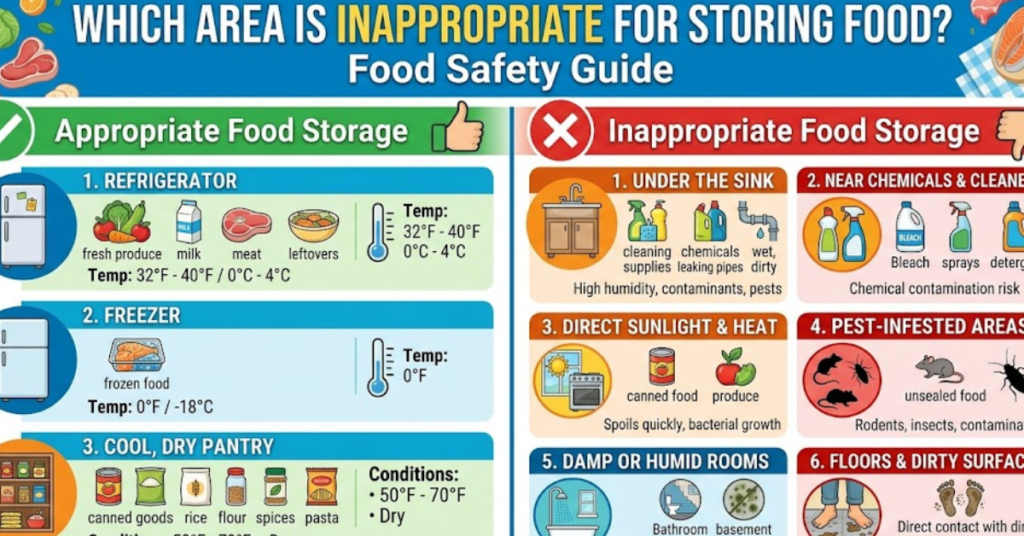
The most inappropriate areas for storing food are locations that expose food to contamination, temperature abuse, or harmful chemicals. Common examples include:
- Bathrooms or restrooms
- Under sinks with cleaning chemicals
- Near garbage or waste bins
- On the floor
- In mechanical rooms or boiler rooms
- Near pesticides or toxic substances
- In humid or damp basements
These locations increase the risk of cross-contamination, pest infestation, and bacterial growth.
Which Area Is Inappropriate for Storing Food ServSafe Guidelines
According to ServSafe food safety standards, food must never be stored in areas that:
- Contain chemicals or cleaning supplies
- Are exposed to sewage or wastewater
- Have high humidity or poor ventilation
- Are prone to pests
- Are below safe storage height (minimum 6 inches off the floor)
ServSafe Example
A classic ServSafe question asks: “Which area is inappropriate for storing food?”
Correct answer: Under a sink used for cleaning supplies.
Why? Because chemicals can leak or spill, contaminating food and creating serious health hazards.
Areas You Should Never Store Food (Detailed Breakdown)
1. Under the Sink
This area often contains:
- Cleaning chemicals
- Detergents
- Bleach
- Pest control sprays
Even sealed food can absorb fumes, making this one of the most inappropriate areas for storing food.
2. On the Floor
Storing food directly on the floor:
- Encourages pests
- Increases contamination risk
- Violates ServSafe guidelines
Always keep food at least 6 inches off the floor.
3. Near Garbage Bins
Trash areas attract:
- Bacteria
- Insects
- Rodents
These contaminants can easily transfer to nearby food items.
4. Bathrooms or Restrooms
This should be obvious, but it still happens in some workplaces. Restrooms contain:
- High bacterial levels
- Moisture
- Airborne contaminants
Food should never be stored in or near restroom areas.
5. Chemical Storage Rooms
Food stored near:
- Pesticides
- Cleaning agents
- Industrial chemicals
…can become unsafe even without direct contact.
Safe Areas for Food Storage
Now that you know which area is inappropriate for storing food, here are safe alternatives:
- Clean pantry shelves
- Refrigerators at proper temperature (≤ 40°F / 4°C)
- Freezers (0°F / -18°C)
- Dry storage rooms
- Elevated racks away from walls
Best Practices for Proper Food Storage
Follow these simple tips:
- Keep food labeled and dated
- Store raw food below ready-to-eat food
- Maintain proper temperatures
- Use airtight containers
- Rotate stock using FIFO (First In, First Out)
- Keep storage areas clean and dry
Why Proper Food Storage Matters
Improper storage can lead to:
- Foodborne illness
- Spoilage
- Financial loss
- Health code violations
- Pest infestation
Understanding which area is inappropriate for storing food helps prevent these problems.
FAQs About Inappropriate Food Storage
1. Which area is inappropriate for storing food?
Areas like under sinks, bathrooms, near garbage bins, and chemical storage rooms are inappropriate for storing food.
2. Which area is inappropriate for storing food ServSafe?
ServSafe states food should not be stored under sinks, near chemicals, on the floor, or in damp areas.
3. Can food be stored in a basement?
Only if the basement is clean, dry, pest-free, and temperature-controlled.
4. Why can’t food be stored under the sink?
Cleaning chemicals can leak, causing contamination.
5. What is the minimum height for food storage?
ServSafe recommends storing food at least 6 inches off the floor.
Conclusion
Knowing which area is inappropriate for storing food is essential for maintaining food safety at home or in a professional kitchen. Avoid storing food under sinks, near chemicals, on the floor, or in humid areas. Instead, choose clean, dry, and temperature-controlled storage spaces.