
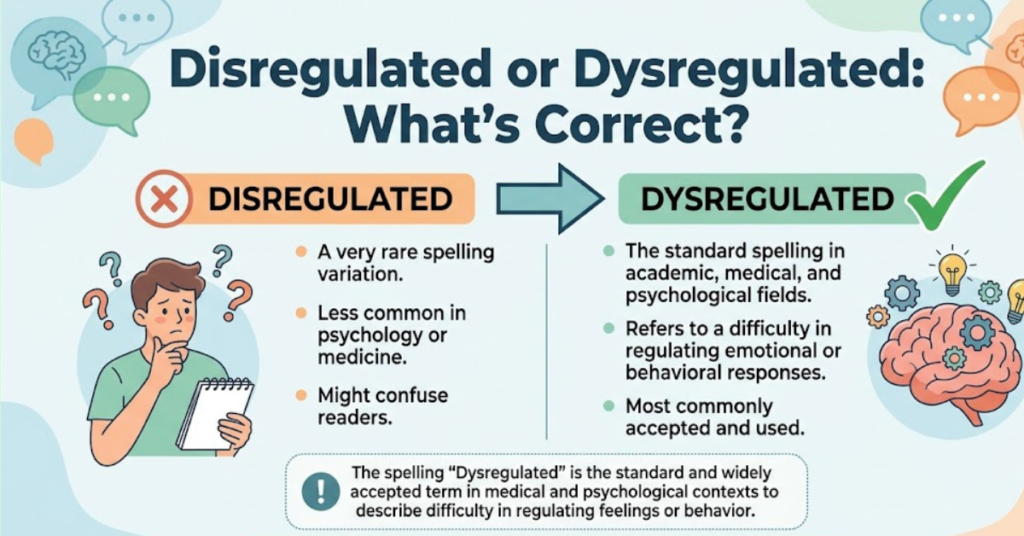

Have you ever paused mid-sentence wondering whether it’s disregulated or dysregulated? You’re not alone. This common confusion pops up in writing across healthcare, psychology, and everyday communication.
In this article, we’ll break down the difference, explain the correct usage (especially for disregulated or dysregulated UK contexts), and show you how to use the right term confidently. By the end, you’ll not only know is it disregulated or dysregulated, but also understand the meaning behind the word itself.
Disregulated or Dysregulated: What’s the Correct Term?
Let’s clear it up right away:
“Dysregulated” is the correct spelling.
“Disregulated” is generally incorrect and rarely used in standard English.
Why “Dysregulated” Is Correct
The prefix “dys-” comes from Greek and means:
- Difficult
- Abnormal
- Impaired
So, dysregulated refers to something that is not functioning properly or is out of balance.
What About “Disregulated”?
The prefix “dis-” usually means:
- Not
- Opposite of
- Lacking
While “disregulated” might seem logical, it’s not widely accepted in formal writing or dictionaries. That’s why when people ask is it disregulated or dysregulated, the answer is clear: use “dysregulated.”
What Does Dysregulated Mean?
Simple Definition
Dysregulated describes a system, process, or emotion that is not working as it should.
Common Contexts
You’ll often see it used in:
1. Mental Health
- Emotional dysregulation (difficulty managing emotions)
- Mood instability
2. Medical/Physiological Terms
- Hormonal dysregulation
- Immune system imbalance
3. Behavioral Science
- Impulse control issues
- Stress response problems
Dysregulated in UK Usage
If you’re specifically wondering about disregulated or dysregulated UK, the answer doesn’t change.
In both British and American English:
- “Dysregulated” is standard and correct
- There is no UK-specific alternative spelling
So whether you’re writing academically or casually in the UK, stick with dysregulated.
Examples of Correct Usage
Here are some natural examples to make things clearer:
- “Her sleep cycle became dysregulated after weeks of stress.”
- “Children with ADHD may struggle with dysregulated attention.”
- “A dysregulated immune response can lead to inflammation.”
Why People Get Confused
The confusion around disregulated or dysregulated usually comes from:
1. Similar Prefixes
“Dis-” is far more common in English, so people default to it.
2. Pronunciation
Both words sound similar when spoken quickly.
3. Lack of Awareness
Many don’t realize “dys-” has a specific meaning tied to dysfunction.
Dysregulation vs Regulation: Key Differences
| Term | Meaning |
| Regulation | Normal, balanced functioning |
| Dysregulation | Impaired or abnormal functioning |
Think of it this way:
Regulation = system working smoothly
Dysregulation = system struggling or out of sync
When Should You Use “Dysregulated”?
Use it when describing:
- Emotional imbalance
- Biological irregularities
- Cognitive or behavioral instability
Quick Checklist
Use dysregulated if:
- Something isn’t functioning properly
- There’s a loss of control or balance
- It’s used in medical or psychological context
Common Mistakes to Avoid
Here are a few pitfalls:
- Writing “disregulated” in formal content
- Assuming UK English uses a different version
- Using the word without understanding its meaning
Stick with dysregulated, and you’ll be safe in almost every context.
FAQs
1. Is it disregulated or dysregulated?
The correct spelling is dysregulated. “Disregulated” is not standard English.
2. What does dysregulated mean in simple terms?
It means something is not functioning normally or is out of balance, especially in emotional or biological systems.
3. Is dysregulated used in UK English?
Yes. In disregulated or dysregulated UK usage, dysregulated is the correct and accepted term.
4. Why do people say “disregulated”?
It’s usually a mistake caused by confusion with the common prefix “dis-”.
5. Can dysregulated apply to emotions?
Absolutely. Emotional dysregulation refers to difficulty managing or controlling emotions.
Conclusion
So, when it comes to disregulated or dysregulated, the answer is straightforward: “dysregulated” is the correct and widely accepted term.
Understanding the difference isn’t just about spelling—it’s about clarity and credibility in your writing. Whether you’re discussing mental health, biology, or behavior, using the right term helps communicate your message more effectively.
If you want to sharpen your writing even further, keep exploring commonly confused words like this—small details can make a big difference.