
Have you ever come across the phrase trama vs trauma and wondered if they mean the same thing? You’re not alone. These two words often get confused, especially because they look and sound similar. But here’s the truth: one is a commonly used psychological term, while the other is usually a misspelling or has a completely different meaning depending on context.
In this article, we’ll break down trama vs trauma in a simple, conversational way—so you can understand the difference, use the correct term confidently, and avoid common mistakes.
What Does “Trauma” Mean?
Trauma is a well-established term in psychology and medicine. It refers to a deeply distressing or disturbing experience that can affect a person mentally, emotionally, or physically.
Types of Trauma
Trauma can show up in different forms, including:
- Emotional trauma: Caused by events like loss, abuse, or neglect
- Physical trauma: Injuries to the body from accidents or violence
- Psychological trauma: Long-term mental effects from distressing events
Common Causes of Trauma
Some common triggers include:
- Accidents or natural disasters
- Loss of a loved one
- Childhood abuse or neglect
- War or violence
Effects of Trauma
Trauma doesn’t affect everyone the same way, but common symptoms include:
- Anxiety or panic attacks
- Flashbacks or nightmares
- Difficulty trusting others
- Emotional numbness
What Is “Trama”?
Here’s where things get interesting. “Trama” is not the same as trauma.
Possible Meanings of “Trama”
- Misspelling: Most commonly, “trama” is simply a typo for “trauma.”
- Literary term (in some languages): In languages like Spanish or Italian, trama can mean “plot” or “storyline.”
- Rare usage in English: It’s not a standard English word in psychological or medical contexts.
Why the Confusion Happens
The confusion in trama vs trauma usually comes from:
- Typing errors
- Pronunciation similarities
- Lack of familiarity with the correct term
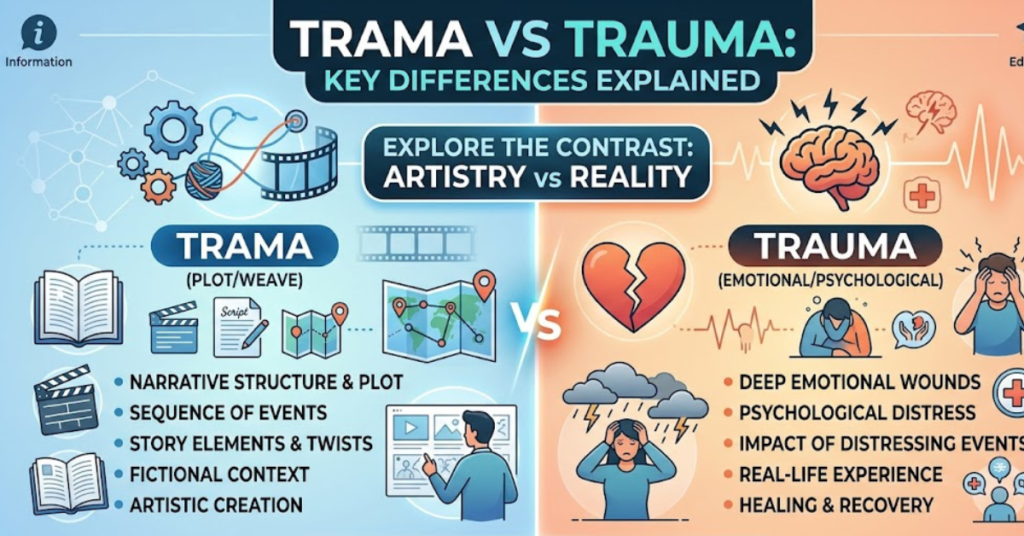
Trama vs Trauma: Key Differences
Let’s simplify the comparison:
| Aspect | Trauma | Trama |
| Meaning | Psychological or physical distress | Usually a misspelling or “plot” in other languages |
| Usage | Medical and psychological contexts | Rare in English |
| Correct spelling? | Yes | No (in most English cases) |
| Common confusion? | Frequently misunderstood | Often mistaken for trauma |
When Should You Use “Trauma”?
Use trauma when referring to:
- Mental health discussions
- Emotional or psychological distress
- Medical injuries
Example Sentences
- “She is recovering from emotional trauma.”
- “The accident caused severe physical trauma.”
When Is “Trama” Acceptable?
You should only use trama in very specific situations:
- When writing in another language (like Spanish or Italian)
- When referring to a storyline or plot in those languages
Otherwise, it’s best to avoid it in English writing.
Why Understanding Trama vs Trauma Matters
Getting the difference right isn’t just about spelling—it’s about clarity and credibility.
Here’s why it matters:
- Professional communication: Using the correct term shows knowledge
- Emotional sensitivity: Trauma is a serious topic and should be addressed accurately
Common Mistakes to Avoid
When dealing with trama vs trauma, watch out for these errors:
- Using “trama” in place of “trauma” in essays or articles
- Assuming both words are interchangeable
- Ignoring context (language differences matter)
FAQs
1. Is “trama” a real word in English?
Not really. In most English contexts, it’s considered a misspelling of “trauma.”
2. Why do people confuse trama vs trauma?
Because the words look similar and are easy to mistype or mishear.
3. What is the correct spelling for psychological distress?
The correct term is trauma.
4. Can “trama” ever be correct?
Yes, but only in other languages where it means “plot” or “storyline.”
5. How can I avoid this mistake in writing?
Proofread carefully and remember that “trauma” is the correct term in English.
Conclusion
Understanding trama vs trauma is simpler than it first appears. Trauma is the correct and widely used term for emotional, psychological, or physical distress. On the other hand, trama is usually just a spelling mistake or a word from another language.
Getting this distinction right can improve your writing, communication, and credibility. Next time you’re unsure, remember: if you’re talking about distress or injury, “trauma” is the word you’re looking for.
If you want to sharpen your writing further, keep exploring commonly confused words—it’s a small step that makes a big difference.