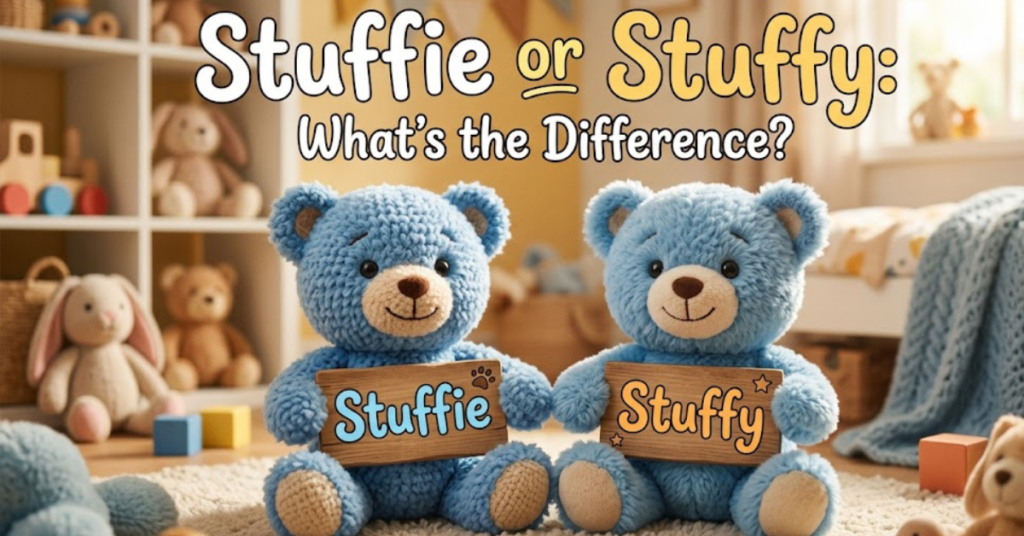

Have you ever paused while typing and wondered whether to use stuffie or stuffy? You’re definitely not alone. These two words sound similar, but they mean very different things depending on the context.
The phrase stuffie or stuffy often confuses people because one refers to a soft toy or beloved comfort item, while the other usually describes something blocked, formal, or uncomfortable. Knowing which one to use can save you from awkward mistakes in writing and conversation.
In this guide, we’ll break down the difference between stuffie and stuffy, explain where each word comes from, and show real-life examples so you can use both with confidence.
Understanding Stuffie or Stuffy
At first glance, these words seem interchangeable. They’re only one letter apart, after all. But in everyday English, they serve completely different purposes.
Quick Definition
- Stuffie = A stuffed toy, plushie, teddy bear, or comfort toy
- Stuffy = Something that feels blocked, formal, boring, or lacking fresh air
Simple, right? But let’s go deeper.
What Does “Stuffie” Mean?
The word stuffie is commonly used as a cute, informal term for a stuffed animal or plush toy.
It’s especially popular among:
- Children
- Parents
- Teachers
- Collectors of plush toys
- People talking about comfort objects
For example:
- “My daughter sleeps with her favorite bunny stuffie every night.”
- “I bought a dinosaur stuffie for my nephew.”
Why People Say “Stuffie”
“Stuffie” sounds softer, warmer, and more affectionate than “stuffed animal.” It often carries emotional value because these toys are linked to comfort and childhood memories.
Some related words include:
- plushie
- teddy bear
- stuffed toy
- soft toy
- cuddle toy
In modern parenting blogs and social media, “stuffie” is extremely common.
What Does “Stuffy” Mean?
The word stuffy has several meanings, and none of them involve plush toys.
1. A Blocked Nose
This is one of the most common uses.
Example:
- “I can’t sleep because I have a stuffy nose.”
Here, stuffy means congested or blocked.
2. Lack of Fresh Air
It can also describe a room that feels hot, closed, and uncomfortable.
Example:
- “Open the window—it’s too stuffy in here.”
This means the room lacks ventilation.
3. Formal or Boring Personality
Sometimes stuffy describes a person, place, or atmosphere that feels overly formal, rigid, or dull.
Example:
- “That office has a stuffy corporate culture.”
This suggests the environment feels serious and not relaxed.
Stuffie or Stuffy: Side-by-Side Comparison
| Word | Meaning | Example |
| Stuffie | Stuffed toy or plush animal | “She lost her favorite elephant stuffie.” |
| Stuffy | Congested, airless, or overly formal | “This room feels stuffy.” |
This table makes the stuffie or stuffy confusion much easier to solve.
Common Mistakes People Make
Because both words sound alike, people often mix them up in writing.
Incorrect:
- “My son sleeps with his favorite stuffy.”
This isn’t always wrong, but it depends on regional usage. In some places, especially in North America, people do use “stuffy” to mean stuffed toy. However, stuffie is often considered clearer and more intentional.
Better:
- “My son sleeps with his favorite stuffie.”
This avoids confusion with “stuffy nose.”
Regional Differences in Usage
Language changes depending on where you live.
In the United States
Both “stuffie” and “stuffy” may be used for stuffed animals, but “stuffie” is becoming more popular in parenting communities.
In Canada
“Stuffie” is especially common for plush toys.
In the UK
People are more likely to say:
- soft toy
- teddy
- cuddly toy
The term “stuffie” is less common but still understood.
Which One Should You Use?
If you’re talking about a plush toy, stuffie is usually the safer choice.
If you’re talking about:
- a blocked nose
- a hot room
- a formal personality
then stuffy is correct.
Easy Memory Trick
Think of it this way:
- Stuffie = stuffed animal friend
- Stuffy = stuffy nose or stuffy room
That quick reminder helps many people remember the difference.
Why This Confusion Happens
English is full of words that sound nearly identical but mean different things.
Examples include:
- their / there / they’re
- affect / effect
- compliment / complement
- stuffie / stuffy
The confusion increases because some families casually use “stuffy” for stuffed toys, especially with young children.
That means both may appear in conversation—but context matters.
Stuffie in Modern Pop Culture
Social media platforms like TikTok, Instagram, and Pinterest have made the word “stuffie” even more popular.
People now post about:
- stuffed animal collections
- emotional support plushies
- bedtime comfort routines
- aesthetic room décor with plush toys
This has made “stuffie” feel trendy, warm, and relatable.
Searches for stuffie or stuffy have increased because more people are encountering the term online.
FAQs About Stuffie or Stuffy
Is stuffie a real word?
Yes, although it’s informal. “Stuffie” is widely used to describe stuffed animals or plush toys, especially in parenting and casual speech.
Can stuffy mean stuffed animal?
Yes, in some families and regions, especially in the U.S., people use “stuffy” for stuffed toys. However, it can cause confusion because “stuffy” more commonly means congested or airless.
Which is more correct: stuffie or stuffy?
For a plush toy, stuffie is generally clearer and more widely accepted in modern casual writing.
Is stuffie only for kids?
Not at all. Many adults use “stuffie” too, especially collectors, plushie enthusiasts, and people discussing comfort objects.
What’s another word for stuffie?
Other common words include:
- plushie
- stuffed animal
- soft toy
- teddy bear
- cuddle toy
Conclusion
The debate over stuffie or stuffy is simpler than it seems once you understand the context.
Use stuffie when talking about stuffed animals, plush toys, and comfort companions. Use stuffy when describing a blocked nose, a poorly ventilated room, or an overly formal atmosphere.
It’s a small difference, but using the right word makes your writing clearer and more natural. Whether you’re writing a parenting blog, texting a friend, or shopping for the perfect plush gift, knowing the distinction helps.