
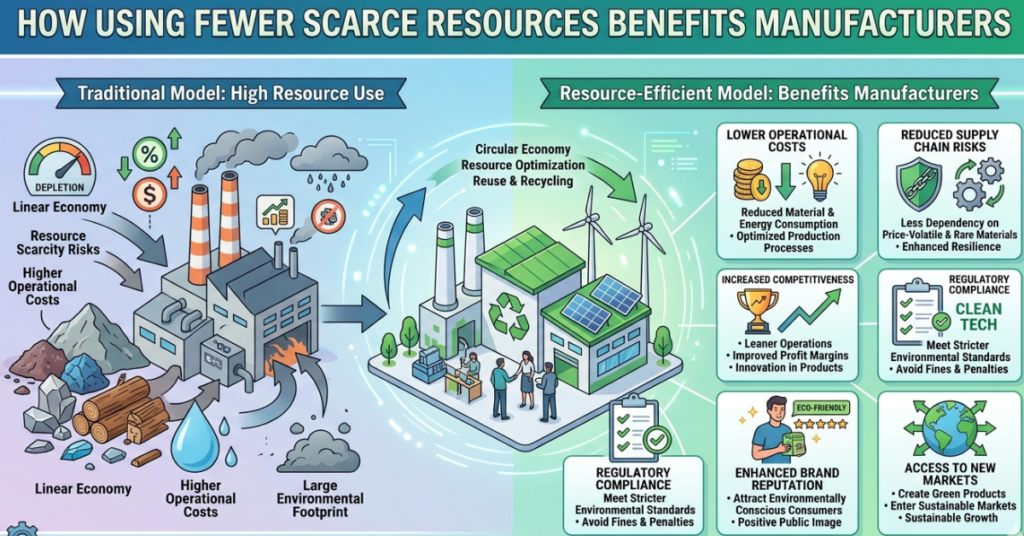

Raw materials aren’t unlimited—and manufacturers know this better than anyone. Rising costs, supply chain disruptions, and environmental pressures are pushing companies to rethink how they operate. So, how would a manufacturer benefit by using fewer scarce resources? The answer goes beyond simple cost savings. It touches productivity, innovation, brand reputation, and long-term business survival.
In this article, we’ll explore the real-world advantages of reducing reliance on scarce resources, why it matters in modern manufacturing, and how companies can successfully make the transition.
What Are Scarce Resources in Manufacturing?
Scarce resources are materials or inputs that are limited in supply but essential for production. These can include:
- Rare metals (like lithium or cobalt)
- Fossil fuels and energy sources
- Water
- Timber or natural fibers
- Specialized components
Because these resources are limited, their prices fluctuate and availability can be unpredictable. This creates risk for manufacturers that depend heavily on them.
How Would a Manufacturer Benefit by Using Fewer Scarce Resources?
1. Lower Production Costs
Using fewer scarce resources often leads to immediate cost savings. When materials are expensive or volatile in price, reducing consumption directly impacts the bottom line.
Examples of cost benefits:
- Lower raw material expenses
- Reduced energy bills
- Less waste disposal cost
- Lower transportation expenses
Manufacturers that streamline resource use often improve profit margins without raising product prices.
2. Improved Supply Chain Stability
Scarce resources are prone to shortages. Political issues, environmental restrictions, or increased demand can disrupt supply.
By using fewer scarce resources, manufacturers:
- Reduce dependency on volatile markets
- Avoid production delays
- Maintain consistent output
- Strengthen long-term planning
This stability helps companies stay competitive even when markets fluctuate.
3. Enhanced Sustainability and Environmental Impact
Sustainability is no longer optional—it’s expected. Using fewer scarce resources helps reduce environmental damage and conserve natural reserves.
Benefits include:
- Lower carbon emissions
- Reduced waste generation
- Less environmental degradation
- Improved compliance with regulations
Companies that prioritize resource efficiency often gain eco-friendly certifications, which appeal to modern consumers.
4. Increased Operational Efficiency
When manufacturers minimize resource usage, they often redesign processes to be leaner and smarter.
This leads to:
- Optimized production workflows
- Reduced downtime
- Less material waste
- Higher productivity per unit
Efficiency improvements frequently create long-term gains that go beyond resource savings.
5. Stronger Brand Reputation
Customers and investors increasingly value responsible businesses. Manufacturers that use fewer scarce resources can market themselves as environmentally conscious and forward-thinking.
This improves:
- Customer trust
- Investor confidence
- Market differentiation
- Employee engagement
Sustainability-focused brands often attract loyal customers willing to pay a premium.
6. Encourages Innovation and Product Development
Resource limitations push companies to think creatively. Many breakthroughs happen when businesses try to reduce dependency on scarce materials.
Examples include:
- Switching to recycled materials
- Designing lighter products
- Developing energy-efficient machinery
- Using digital manufacturing technologies
Innovation not only reduces costs but also opens new market opportunities.
Practical Ways Manufacturers Can Use Fewer Scarce Resources
Here are actionable strategies manufacturers commonly use:
Optimize Material Usage
- Use precision cutting techniques
- Implement lean manufacturing
- Reduce scrap and defects
Invest in Recycling and Reuse
- Recycle production waste
- Use reclaimed materials
- Implement circular economy practices
Improve Energy Efficiency
- Upgrade to energy-efficient machines
- Use renewable energy sources
- Monitor energy consumption
Redesign Products
- Use alternative materials
- Reduce product weight
- Simplify component structures
Economic and Competitive Advantages
Manufacturers that reduce scarce resource use often gain:
- Competitive pricing power
- Better risk management
- Long-term profitability
- Regulatory compliance
- Access to green incentives
These advantages help companies thrive in both stable and uncertain markets.
FAQs
Why is using fewer scarce resources important in manufacturing?
It helps reduce costs, minimize supply chain risks, improve sustainability, and enhance operational efficiency.
Does reducing scarce resources affect product quality?
Not necessarily. Many companies maintain or even improve quality through smarter design and innovation.
What industries benefit the most?
Industries like automotive, electronics, construction, and textiles benefit greatly due to heavy material usage.
Is using fewer scarce resources expensive to implement?
Initial investments may be required, but long-term savings typically outweigh the upfront costs.
How does it help the environment?
It reduces waste, lowers emissions, and conserves natural resources, supporting long-term environmental sustainability.
Conclusion
So, how would a manufacturer benefit by using fewer scarce resources? The benefits are clear: lower costs, stronger supply chains, improved sustainability, and greater innovation. Companies that embrace resource efficiency position themselves for long-term success while reducing environmental impact.
Manufacturers that start optimizing resource usage today will not only save money but also future-proof their operations. Consider exploring lean manufacturing methods, alternative materials, or energy-efficient technologies as your next step toward smarter production.