
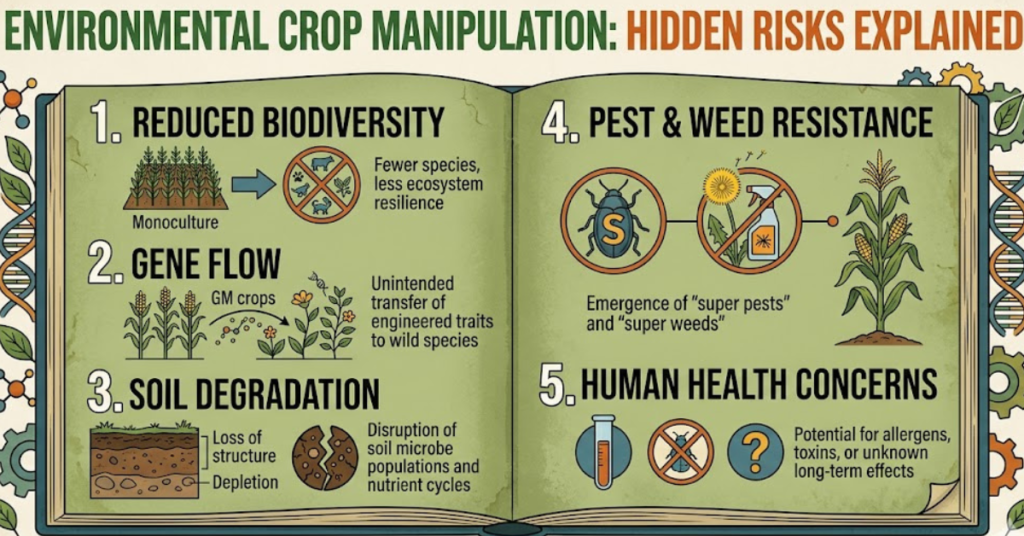

Modern agriculture often relies on environmental manipulation—changing water, soil, temperature, or light conditions—to boost crop yields and improve quality. But how might environmental manipulation of a crop have unexpected consequences? The answer lies in the delicate balance of ecosystems. When farmers or scientists alter growing conditions, even with good intentions, they can unintentionally trigger ripple effects that impact soil health, biodiversity, pest populations, and long-term productivity.
This article explores the hidden risks, real-world examples, and practical considerations behind environmental manipulation of crops, helping you understand both the benefits and potential downsides.
What Is Environmental Manipulation in Agriculture?
Environmental manipulation refers to intentionally altering growing conditions to optimize plant performance. These adjustments can include:
- Changing irrigation levels
- Modifying soil nutrients
- Controlling temperature in greenhouses
- Adjusting light exposure
- Using fertilizers or growth regulators
- Introducing pest control measures
While these practices can increase yields, they may also create unexpected consequences that extend beyond the targeted crop.
How Might Environmental Manipulation of a Crop Have Unexpected Consequences?
1. Disruption of Local Ecosystems
When crops are grown under altered conditions, surrounding ecosystems may struggle to adapt. For example:
- Increased irrigation can raise water tables and cause soil salinity
- Fertilizer runoff may pollute nearby rivers and lakes
- Controlled environments may reduce beneficial insects
These ecological shifts can reduce biodiversity and harm wildlife.
2. Increased Pest and Disease Pressure
Environmental manipulation sometimes favors pests as much as crops. For instance:
- Warmer temperatures can accelerate insect life cycles
- High nitrogen fertilizers may attract aphids
- Monoculture conditions make disease spread easier
Over time, this can lead to pesticide resistance, making crop management more difficult.
3. Soil Health Degradation
Soil is a living ecosystem. When heavily manipulated, it may lose balance. Common risks include:
- Nutrient depletion
- Reduced microbial diversity
- Soil compaction from irrigation changes
- Increased erosion
Healthy soil supports long-term productivity, so disruption can harm future yields.
4. Unintended Genetic or Phenotypic Changes
Environmental conditions influence plant traits. Manipulating them may lead to:
- Reduced flavor or nutritional quality
- Changes in growth patterns
- Lower resilience to stress
- Dependence on controlled environments
This means crops may perform poorly outside the manipulated setting.
5. Impact on Pollinators and Beneficial Species
Pollinators like bees and butterflies depend on stable environments. Alterations such as pesticide use or greenhouse production can:
- Limit pollinator access
- Reduce flowering diversity
- Disrupt natural food chains
This affects not only the manipulated crop but also neighboring plants.
Real-World Examples of Unexpected Consequences
Example 1: Over-Irrigation and Salinity
In some regions, excessive irrigation improved short-term yields but caused soil salinization, making land unsuitable for farming later.
Example 2: Fertilizer Runoff and Algal Blooms
High fertilizer use boosted crop growth but led to nutrient runoff. This triggered algal blooms in nearby water bodies, harming aquatic life.
Example 3: Greenhouse Crop Vulnerability
Greenhouse-grown vegetables often thrive in controlled conditions but may struggle when exposed to natural weather fluctuations.
Secondary Effects on Food Systems
Environmental manipulation doesn’t only affect farms. It can influence:
- Food prices
- Supply stability
- Nutritional quality
- Long-term sustainability
These broader impacts highlight why careful planning is essential.
How Farmers Can Reduce Unexpected Consequences
To minimize risks, experts recommend:
- Using precision agriculture technologies
- Monitoring soil health regularly
- Rotating crops to maintain biodiversity
- Reducing chemical inputs where possible
- Implementing integrated pest management (IPM)
- Conserving water through efficient irrigation systems
These strategies balance productivity with environmental sustainability.
Why This Topic Matters for Sustainable Agriculture
Understanding how might environmental manipulation of a crop have unexpected consequences is key to sustainable farming. Agriculture must produce enough food while protecting ecosystems. Ignoring unintended effects can lead to long-term damage that outweighs short-term gains.
FAQs
1. What is environmental manipulation in crops?
Environmental manipulation involves altering growing conditions—like water, temperature, or nutrients—to improve crop growth and yield.
2. Can environmental manipulation increase crop yield?
Yes, it often boosts yield in the short term, but it may create long-term risks such as soil degradation or pest outbreaks.
3. What are the biggest risks of environmental manipulation?
The major risks include ecosystem disruption, soil health decline, increased pests, reduced biodiversity, and water pollution.
4. Is environmental manipulation always harmful?
No. When done carefully and sustainably, it can be beneficial. Problems arise when changes are excessive or poorly managed.
5. How can farmers avoid unexpected consequences?
Farmers can use crop rotation, monitor soil health, adopt precision agriculture, and reduce chemical overuse.
Conclusion
So, how might environmental manipulation of a crop have unexpected consequences? The answer lies in the interconnected nature of agriculture and ecosystems. While altering environmental conditions can improve yields, it may also disrupt soil health, increase pests, reduce biodiversity, and affect long-term sustainability.
The key takeaway is balance. Smart, measured environmental manipulation—combined with sustainable practices—can help farmers maximize productivity without harming the environment.