
Ever looked at someone with striking green eyes and wondered, how rare are green eyes really? At the same time, many families quietly face a very different concern—how serious is fluid on the lungs in elderly patients and what it means for health and survival.
At first glance, these topics don’t seem connected. But both touch on something important: understanding the human body—whether it’s genetics shaping eye color or age-related changes affecting the lungs. In this article, we’ll break both down in a simple, clear, and practical way so you actually understand what’s going on, not just memorize facts.
How Rare Are Green Eyes?
The Genetics Behind Green Eyes
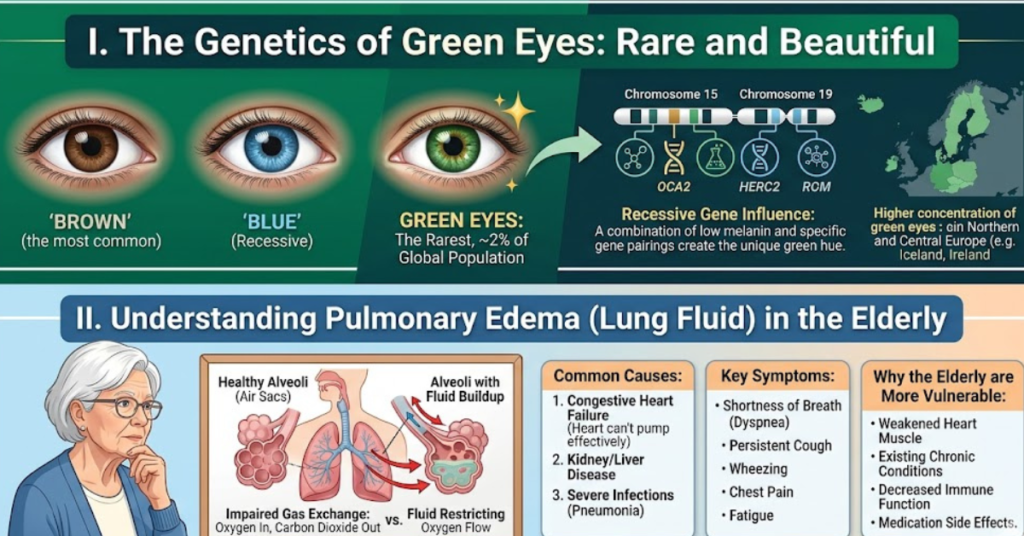
Green eyes are often described as mysterious or exotic, and there’s a reason for that. The question how rare are green eyes comes up a lot because they are one of the least common eye colors in the world.
Eye color is determined mainly by melanin (pigment) in the iris and how light scatters through it. Green eyes sit right in the middle—not as much melanin as brown eyes, but more complex light scattering than blue eyes.
Key genetic points:
- Eye color is influenced by multiple genes, not just one
- Green eyes are a mix of low melanin and light scattering
- They often appear due to subtle variations in pigmentation
How Rare Are Green Eyes in the World?
So, let’s answer the big question: how rare are green eyes?
Only about 2% of the global population has green eyes, making them one of the rarest eye colors on Earth.
Global breakdown (approximate):
- Brown eyes: 70–80%
- Blue eyes: 8–10%
- Hazel eyes: 5–8%
- Green eyes: ~2%
They are most commonly found in:
- Northern and Central Europe
- Countries like Ireland, Scotland, and parts of Germany
Why Green Eyes Seem So Unique
Green eyes stand out because:
- They change shade depending on lighting
- They often appear golden or hazel in sunlight
- They are less commonly seen in most populations
This rarity is exactly why the keyword how rare are green eyes trends so often in searches.
How Serious Is Fluid on the Lungs in Elderly?
Now shifting to a medical concern that becomes more common with age.
What Does Fluid on the Lungs Mean?
When people ask how serious is fluid on the lungs in elderly, they are usually referring to conditions like:
- Pulmonary edema (fluid inside the lungs)
- Pleural effusion (fluid around the lungs)
Both can make breathing difficult and may signal an underlying health issue.
Why It Happens in Older Adults
Fluid buildup in the lungs is more common in elderly individuals because the body becomes less efficient with age.
Common causes include:
- Heart failure (most common cause)
- Kidney disease
- Lung infections like pneumonia
- Liver disease
- Side effects of certain medications
Symptoms to Watch For
Recognizing symptoms early is crucial when considering how serious fluid on the lungs in elderly patients can be.
Warning signs include:
- Shortness of breath (especially when lying down)
- Persistent coughing or wheezing
- Chest discomfort
- Fatigue and weakness
- Swelling in legs or ankles
If symptoms appear suddenly or worsen quickly, it can become a medical emergency.
How Serious Is It Really?
The seriousness depends on the cause and how quickly it’s treated.
Mild cases:
- May be managed with medication
- Often reversible if treated early
Severe cases:
- Can lead to respiratory failure
- May require hospital care or oxygen therapy
- Can become life-threatening without treatment
So, the honest answer to how serious is fluid on the lungs in elderly is: it ranges from manageable to very serious depending on the underlying condition.
Treatment Options
Treatment focuses on removing excess fluid and addressing the root cause.
Common treatments:
- Diuretics (to remove fluid)
- Oxygen therapy
- Antibiotics (if infection is involved)
- Heart or kidney disease management
- In some cases, draining fluid from the chest
FAQs
1. How rare are green eyes compared to blue eyes?
Green eyes are rarer than blue eyes, making up about 2% of the global population compared to 8–10% for blue eyes.
2. Can eye color change over time?
Yes, slight changes can happen due to lighting, age, or medical conditions, but major changes are uncommon.
3. How serious is fluid on the lungs in elderly people?
It can be very serious, especially if caused by heart failure or infection. Early diagnosis is key.
4. Can fluid on the lungs go away?
Yes, with proper treatment, many cases improve or resolve completely depending on the cause.
5. Is green eye color linked to health conditions?
No, green eyes are purely genetic and not linked to any medical condition.
Conclusion
Whether you’re curious about how rare are green eyes or trying to understand how serious is fluid on the lungs in elderly, both topics highlight how fascinating and complex the human body really is.
Green eyes remain one of the rarest and most striking genetic traits, while fluid in the lungs is a serious medical condition that requires attention—especially in older adults.