
If you’ve ever opened the Bible and felt overwhelmed, you’re not alone. Figuring out how to read the Bible can seem confusing at first—where do you start, and how do you make sense of such an ancient and diverse book? The good news is that with the right approach, reading the Bible can become meaningful, practical, and even life-changing.
This guide breaks down how to read the Bible for beginners, offering clear steps, helpful methods, and real-world tips so you can understand Scripture with confidence.
What Makes the Bible Unique?
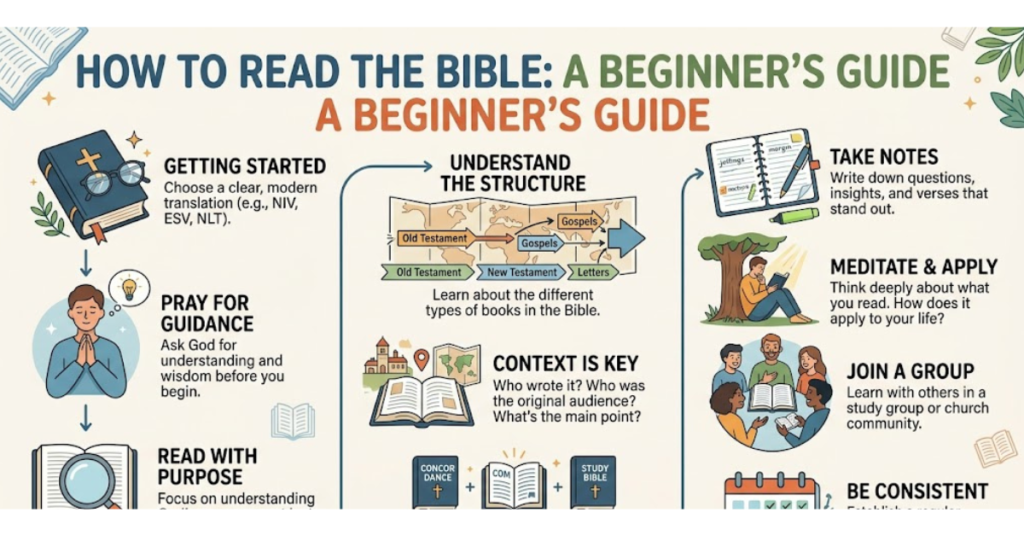
Before diving in, it helps to understand what you’re reading. The Bible isn’t a single book—it’s a collection of 66 books written over centuries by different authors.
It includes various genres, such as:
- History (Genesis, Acts)
- Poetry (Psalms, Proverbs)
- Prophecy (Isaiah, Daniel)
- Letters (Romans, Corinthians)
- Gospels (Matthew, Mark, Luke, John)
Knowing this helps you adjust your reading style depending on the section.
How to Read the Bible for Beginners
1. Start with the Right Books
One common mistake beginners make is starting at Genesis and trying to read straight through. While that works for some, it can feel overwhelming.
Instead, begin with:
- The Gospel of John – Focuses on the life and teachings of Jesus
- Psalms – Offers comfort, prayer, and reflection
- Proverbs – Practical wisdom for daily life
These books are easier to connect with and build a strong foundation.
2. Choose a Clear Translation
Not all Bible translations read the same. Some are more literal, while others are easier to understand.
Good beginner-friendly options include:
- NIV New International Version
- NLT New Living Translation
- ESV English Standard Version
Pick one that feels natural to read—you’re more likely to stay consistent.
3. Use a Simple Reading Plan
A reading plan removes guesswork and builds consistency.
You can try:
- A 30-day Gospel plan
- A one-year Bible plan
- A topical plan (faith, hope, love, etc.)
Consistency matters more than speed.
4. Understand the Context
To truly grasp Scripture, context is everything. Ask questions like:
- Who wrote this?
- Who was it written for?
- What was happening at the time?
This approach is central to how to read the Bible for all its worth, which emphasizes understanding historical and cultural background.
5. Apply the SOAP Method
A simple framework can help you go deeper:
SOAP Method:
- Scripture – Read a passage
- Observation – What stands out?
- Application – How does this apply to your life?
- Prayer – Reflect and respond
This method keeps your reading focused and practical.
How to Read the Bible for All Its Worth
If you want to go beyond surface-level reading, the idea behind how to read the Bible for all its worth is to interpret Scripture carefully and accurately.
Here’s how to do that:
Pay Attention to Literary Style
Poetry shouldn’t be read like history, and prophecy isn’t always literal. Understanding genre helps avoid confusion.
Compare Scripture with Scripture
Use cross-references to see how different parts of the Bible connect.
Avoid Taking Verses Out of Context
A single verse can be misleading if isolated. Always read surrounding passages.
Tips to Stay Consistent
Reading the Bible regularly is often the biggest challenge. These tips can help:
- Set a specific time daily (morning or evening)
- Keep a journal for insights and questions
- Use a Bible app for reminders
- Join a study group or discussion circle
Small, consistent steps lead to long-term growth.
Common Mistakes to Avoid
- Trying to read too much at once – Start small
- Skipping difficult passages entirely – Instead, revisit them later
- Reading without reflection – Understanding matters more than speed
- Expecting instant clarity – Growth takes time
FAQs
How should a beginner start reading the Bible?
Start with the Gospel of John or Psalms, choose an easy-to-read translation, and follow a simple reading plan.
What is the best way to understand the Bible?
Focus on context, use study methods like SOAP, and compare passages to gain deeper insight.
How long should I read the Bible each day?
Even 10–15 minutes daily can be effective if you stay consistent and engaged.
Do I need a study Bible?
It’s not required, but a study Bible can provide helpful notes, explanations, and background information.
Can I read the Bible without guidance?
Yes, but using resources like commentaries or study guides can improve understanding significantly.
Conclusion
Learning how to read the Bible doesn’t have to be complicated. Start small, stay consistent, and focus on understanding rather than rushing. Whether you’re exploring how to read the Bible for beginners or diving deeper into how to read the Bible for all its worth, the key is to approach it with curiosity and intention.