

Ever left a job and wondered if you could go back someday? That’s where the concept of rehireable or rehirable comes in. It’s a simple idea with big implications for your career. Whether you resigned on good terms or were let go, your rehire status can influence future opportunities—not just with your former employer, but with others too.
In this guide, we’ll break down what it means to be rehireable, why companies care, and how you can protect or improve your status moving forward.
What Does Rehireable or Rehirable Mean?
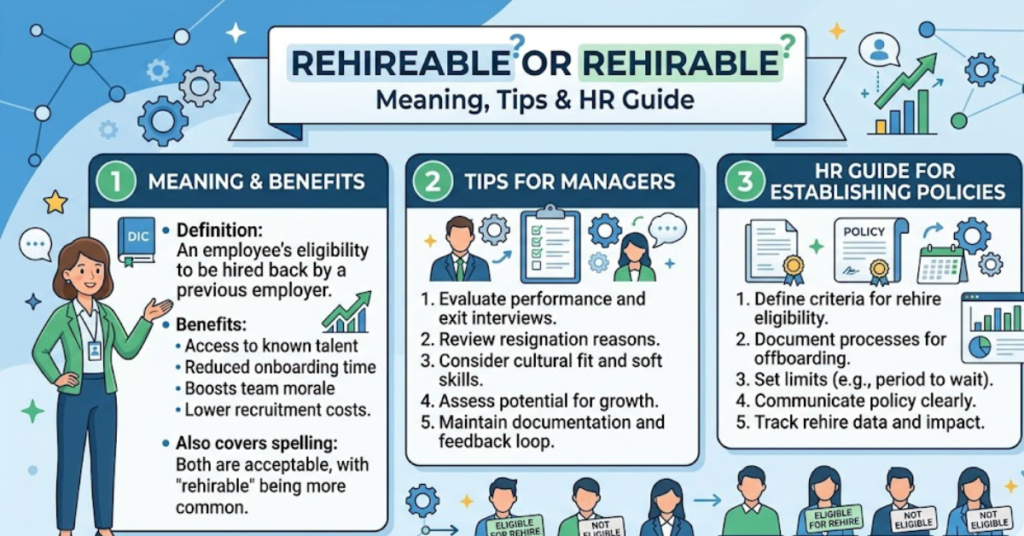
At its core, being rehireable or rehirable means a former employer is open to hiring you again. Companies often mark this status internally when an employee leaves.
Common classifications include:
- Eligible for rehire – You left on good terms and met expectations.
- Not eligible for rehire – There were issues like misconduct or poor performance.
- Conditional rehire – You may be rehired under specific conditions.
This designation is usually recorded in HR systems and may be referenced during background checks or reference calls.
Why Rehire Status Matters
You might think this only affects returning to the same company—but it goes further.
Here’s why it’s important:
- Future job applications: Some employers ask if you’re eligible for rehire at previous jobs.
- Professional reputation: It reflects your work ethic and behavior.
- Networking impact: Managers and HR professionals often share insights informally.
- Boomerang employment trends: Many companies rehire former employees to save time and training costs.
In short, your rehire status becomes part of your long-term career story.
How Companies Decide If You’re Rehireable
Employers don’t make this decision randomly. Several factors influence whether someone is marked as rehireable.
Key factors include:
1. Reason for Leaving
- Voluntary resignation (especially with notice) is usually positive.
- Termination due to misconduct often leads to ineligibility.
2. Job Performance
- Consistently meeting or exceeding expectations helps your case.
- Poor performance reviews can hurt your status.
3. Professional Behavior
- Respectful communication and teamwork matter.
- Conflicts, policy violations, or toxic behavior are red flags.
4. Exit Process
- Giving proper notice
- Completing handovers
- Participating in exit interviews professionally
A smooth exit can leave a lasting positive impression.
How to Stay Rehireable (or Become Rehireable Again)
Even if things didn’t end perfectly, there are ways to improve your standing.
Practical steps you can take:
Leave on Good Terms
- Give at least two weeks’ notice
- Offer to help with the transition
- Thank your employer for the opportunity
Maintain Relationships
- Stay in touch with former colleagues
- Connect on professional platforms
- Be respectful when speaking about past employers
Address Past Issues
If you weren’t considered rehireable:
- Reflect on what went wrong
- Improve those areas in future roles
- Be ready to explain your growth honestly
Build a Strong Track Record
- Show consistency in new roles
- Gather positive references
- Demonstrate professionalism over time
Rehire status isn’t always permanent—growth can change perceptions.
Rehireable vs Not Rehireable: Key Differences
| Aspect | Rehireable | Not Rehireable |
| Departure | Professional and respectful | Problematic or abrupt |
| Performance | Satisfactory or strong | Poor or inconsistent |
| Behavior | Positive and cooperative | Conflict-prone or unethical |
| Future prospects | Open for return | Typically restricted |
Understanding this difference helps you manage your career strategically.
Can You Ask About Your Rehire Status?
Yes—and it’s often a smart move.
When to ask:
- During your exit interview
- After leaving (via HR)
- When considering reapplying
How to ask:
Keep it simple and professional:
- “Would I be considered eligible for rehire in the future?”
This shows maturity and foresight.
Common Misconceptions About Rehireable Status
Let’s clear up a few myths:
- “It only matters if I want my old job back.”
Not true—other employers may care too. - “Once marked not rehireable, it’s permanent.”
Sometimes policies change, or exceptions are made. - “Only HR decides this.”
Managers often provide input that heavily influences the decision.
FAQs
1. Is “rehireable” or “rehirable” the correct spelling?
Both are used, but “rehirable” is more common in modern usage. However, many companies use them interchangeably.
2. Can I be rehired after being terminated?
It depends on the reason. If termination was due to restructuring or minor issues, rehire may still be possible.
3. Do all companies check rehire eligibility?
Not all, but many do—especially larger organizations with formal HR processes.
4. How long does rehire status stay on record?
It varies by company. Some keep records indefinitely, while others update them over time.
5. Can I change my rehire status?
You may not be able to change it directly, but you can improve your professional reputation and reapply later.
Conclusion
Understanding whether you’re rehireable or rehirable is more than just an HR detail—it’s a reflection of your professional journey. The way you leave a job can shape future opportunities in ways you might not expect.
The good news? You have control over most of the factors that influence this status. By maintaining professionalism, building strong relationships, and learning from past experiences, you can keep doors open—even ones you thought were closed.
If you’re planning a career move soon, start thinking about your exit strategy now. It might just determine your next opportunity.