

You’ve probably seen both spellings floating around online and wondered: is it studder or stutter? The confusion is surprisingly common, but the answer is straightforward—and understanding it opens the door to learning more about a condition that affects millions worldwide.
Stuttering is a speech disorder that impacts the flow of speech, often beginning in childhood and sometimes continuing into adulthood. In this article, we’ll clear up the spelling confusion, explore what stuttering really is, why it happens, and how it can be managed effectively.
Is It Studder or Stutter?
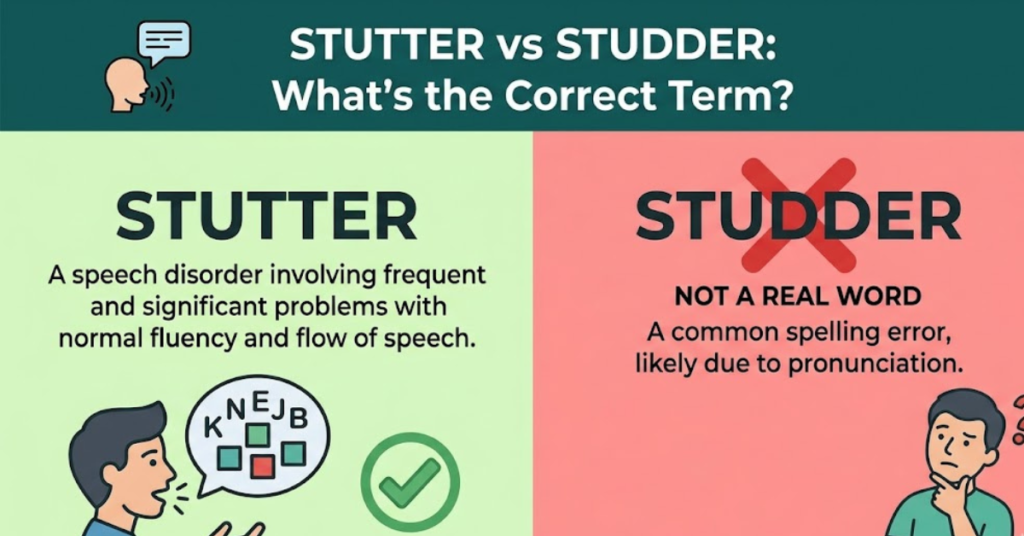
Let’s settle this first: “stutter” is the correct spelling.
“Studder” is simply a common misspelling. While people often search for studder or stutter, only stutter is recognized in dictionaries and medical contexts.
Why the Confusion Happens
- English pronunciation can be misleading
- Double consonants (like “tt”) often trip people up
- The word sounds similar to how “studder” might be spelled phonetically
So if you’ve been wondering is it studder or stutter, now you know—the correct form is stutter.
What Is Stuttering?
Stuttering is a speech fluency disorder where the natural flow of speaking is interrupted. These disruptions are often called “disfluencies.”
Common Types of Disfluencies
- Repetitions: “I-I-I want that”
- Prolongations: “Ssssssometimes”
- Blocks: Pauses where no sound comes out
These can vary in severity and may come and go depending on the situation.
What Causes Stuttering?
There’s no single cause of stuttering. Instead, it’s usually the result of multiple interacting factors.
1. Genetics
Stuttering tends to run in families. If a close relative stutters, the chances are higher.
2. Brain Function
Research shows differences in how the brain processes speech and language in people who stutter.
3. Developmental Factors
Many children go through a phase of disfluency while learning to speak. For most, it resolves naturally—but for some, it persists.
4. Emotional and Environmental Triggers
Stress, pressure, or excitement can make stuttering more noticeable, though they don’t directly cause it.
Symptoms of Stuttering
Stuttering is more than just repeating words. It can include both verbal and physical signs.
Verbal Symptoms
- Repeating sounds or syllables
- Stretching out sounds
- Difficulty starting words
Physical Symptoms
- Eye blinking
- Facial tension
- Head movements
These physical responses often occur as the person tries to push through a speech block.
Who Is Affected by Stuttering?
Stuttering can affect anyone, but certain patterns are common:
- Children aged 2–6: Most common onset
- Boys more than girls: Boys are more likely to continue stuttering
- Adults: Some carry it into adulthood, while others develop it after neurological events
How Is Stuttering Diagnosed?
A speech-language pathologist (SLP) typically evaluates:
- Speech patterns
- Frequency of disfluencies
- Impact on communication
- Family history
Early diagnosis is especially important in children, as early intervention improves outcomes.
Treatment and Management Options
While there’s no universal “cure,” stuttering can be effectively managed.
1. Speech Therapy
The most common and effective approach. Techniques include:
- Slowing down speech
- Controlled breathing
- Practicing smooth speech patterns
2. Cognitive Behavioral Therapy (CBT)
Helps manage anxiety or negative thoughts related to speaking.
3. Assistive Devices
Some devices alter auditory feedback, helping improve fluency temporarily.
4. Support Groups
Connecting with others who stutter can build confidence and reduce isolation.
Tips for Supporting Someone Who Stutters
If you interact with someone who stutters, your response matters more than you think.
Do:
- Be patient and listen fully
- Maintain eye contact
- Let them finish their sentences
Don’t:
- Interrupt or finish their words
- Tell them to “slow down” or “relax”
- Make them feel rushed
Living with Stuttering
Many people who stutter lead successful, confident lives. In fact, several well-known public figures have openly discussed their experiences with stuttering.
The key is not just fluency—but confidence, communication, and acceptance.
FAQs
1. Is it studder or stutter?
The correct spelling is stutter. “Studder” is a common misspelling.
2. Can stuttering go away on its own?
Yes, especially in children. Many outgrow it naturally, but some may need therapy.
3. Is stuttering caused by anxiety?
No, but anxiety can make it worse. Stuttering is primarily neurological and developmental.
4. Can adults develop stuttering?
Yes, though it’s less common. It can happen after brain injury, stroke, or trauma.
5. Is there a permanent cure?
There’s no guaranteed cure, but many treatments help manage and significantly improve speech fluency.
Conclusion
So, the next time you wonder is it studder or stutter, you’ll know the correct answer—and much more. Stuttering is a complex but manageable condition that goes far beyond simple speech interruptions.
With the right support, therapy, and understanding, people who stutter can communicate effectively and confidently. If you or someone you know is struggling, exploring professional help is a strong and positive next step.