
Your paycheck arrives, and instead of excitement, you’re staring at a bunch of numbers, codes, and abbreviations. Sound familiar? You’re not alone. Many people don’t fully understand how to read a pay stub, which can lead to confusion about taxes, deductions, and actual take-home pay.
This guide breaks everything down in plain English. Whether you’re trying to understand taxes, tips, or using a how to read a pay stub worksheet, you’ll learn exactly what each section means and why it matters. By the end, you’ll feel confident checking your earnings and spotting any mistakes.
What Is a Pay Stub?
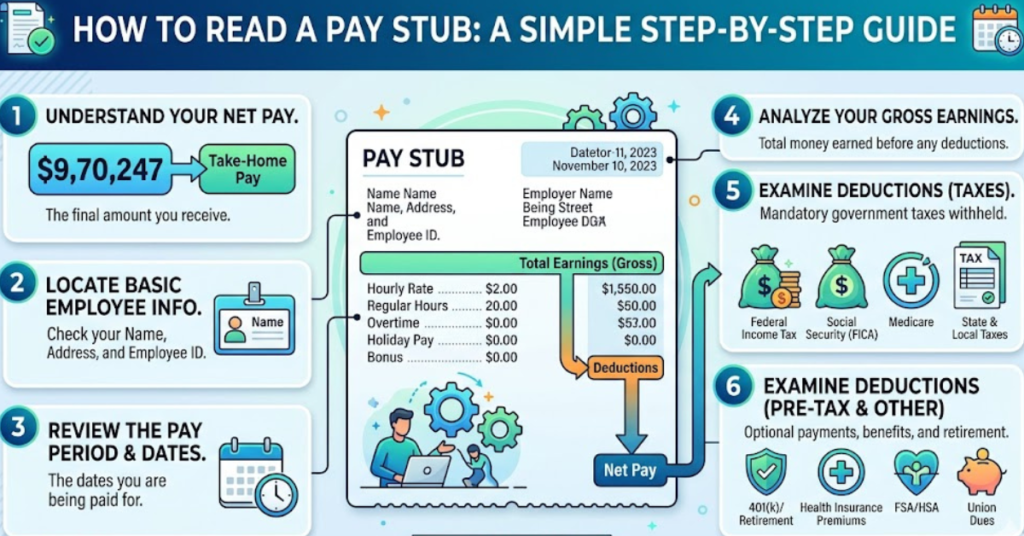
A pay stub (also called a paycheck stub or earnings statement) is a document that shows how much you earned and what was deducted from your paycheck.
It typically includes:
- Gross earnings
- Taxes withheld
- Benefits and deductions
- Net pay (take-home pay)
- Pay period information
Understanding these sections is the first step in learning how to read a pay stub for taxes and deductions.
Key Sections of a Pay Stub Explained
1. Employee and Employer Information
At the top of most pay stubs, you’ll find:
- Your name and address
- Employer’s name
- Employee ID
- Pay period dates
This section confirms the paycheck belongs to you and reflects the correct time frame.
2. Gross Pay Your Total Earnings
Gross pay is the total amount you earned before deductions.
It may include:
- Regular wages
- Overtime pay
- Bonuses
- Commission
- Tips (for service workers)
If you’re learning how to read a pay stub with tips, this is where tips may appear as:
- Reported tips
- Allocated tips
- Cash tips
3. Taxes Withheld
This section shows how much money is taken out for taxes. When learning how to read a pay stub for taxes, pay attention to:
Common tax deductions:
- Federal income tax
- State income tax
- Social Security (FICA)
- Medicare
- Local taxes (if applicable)
These are required by law and reduce your gross pay.
4. Pre-Tax and Post-Tax Deductions
Deductions can be split into two categories:
Pre-Tax Deductions (lower taxable income):
- Health insurance
- Retirement contributions (401k)
- Flexible spending accounts
Post-Tax Deductions:
- Wage garnishments
- Union dues
- Charitable donations
Understanding this helps you calculate your real take-home pay accurately.
5. Net Pay Take-Home Pay
Your net pay is what you actually receive after all deductions.
Formula:
Gross Pay – Taxes – Deductions = Net Pay
This is the amount deposited into your bank account.
How to Read a Pay Stub Worksheet Step-by-Step
Using a worksheet makes it easier to practice. Here’s a simple method:
Step 1: Locate Gross Pay
Write down your total earnings.
Step 2: List All Taxes
Add:
- Federal tax
- State tax
- Social Security
- Medicare
Step 3: Identify Other Deductions
Include benefits, retirement, or insurance.
Step 4: Calculate Net Pay
Subtract total deductions from gross pay.
Step 5: Compare with Your Paycheck
Make sure the numbers match.
This simple how to read a pay stub worksheet approach helps avoid payroll mistakes.
How to Read a Pay Stub With Tips
If you work in hospitality, your pay stub may include tips.
You might see:
- Reported tips – tips you declared
- Allocated tips – employer-assigned tips for tax purposes
- Tip credit – amount used to meet minimum wage
Important tip:
Tips are taxable, so they affect your total tax deductions.
Common Pay Stub Abbreviations
Understanding abbreviations makes reading easier:
- YTD = Year to Date
- FIT = Federal Income Tax
- FICA = Social Security + Medicare
- MED = Medicare
- SS = Social Security
- OT = Overtime
- REG = Regular Pay
Why It’s Important to Read Your Pay Stub
Learning how to read a pay stub helps you:
- Catch payroll errors
- Verify tax deductions
- Track earnings
- Budget better
- Prepare for tax season
Even small mistakes can add up over time.
Quick Pay Stub Example
Gross Pay: $1,000
Federal Tax: $120
State Tax: $40
Social Security: $62
Medicare: $14.50
Health Insurance: $50
Net Pay: $713.50
This is how deductions reduce your take-home amount.
FAQs
What is the most important part of a pay stub?
The most important parts are gross pay, taxes withheld, and net pay. These show how much you earned and what you actually take home.
How do I read a pay stub for taxes?
Look at the taxes section and identify federal, state, Social Security, and Medicare deductions. These determine your total tax withholding.
What does YTD mean on a pay stub?
YTD means “Year to Date.” It shows totals from the beginning of the year up to your current paycheck.
How do tips show on a pay stub?
Tips may appear as reported tips, allocated tips, or tip income. They are usually included in gross pay and taxed.
Can a pay stub be wrong?
Yes. Errors can happen in hours worked, tax deductions, or benefits. Always review each pay stub carefully.
Conclusion
Understanding how to read a pay stub puts you in control of your finances. Once you know how to identify gross pay, taxes, deductions, and net income, your paycheck becomes much easier to understand.
Using a how to read a pay stub worksheet, checking tip income, and reviewing tax deductions regularly helps you avoid costly mistakes. The next time you receive your paycheck, take a minute to review it—you might catch something important.